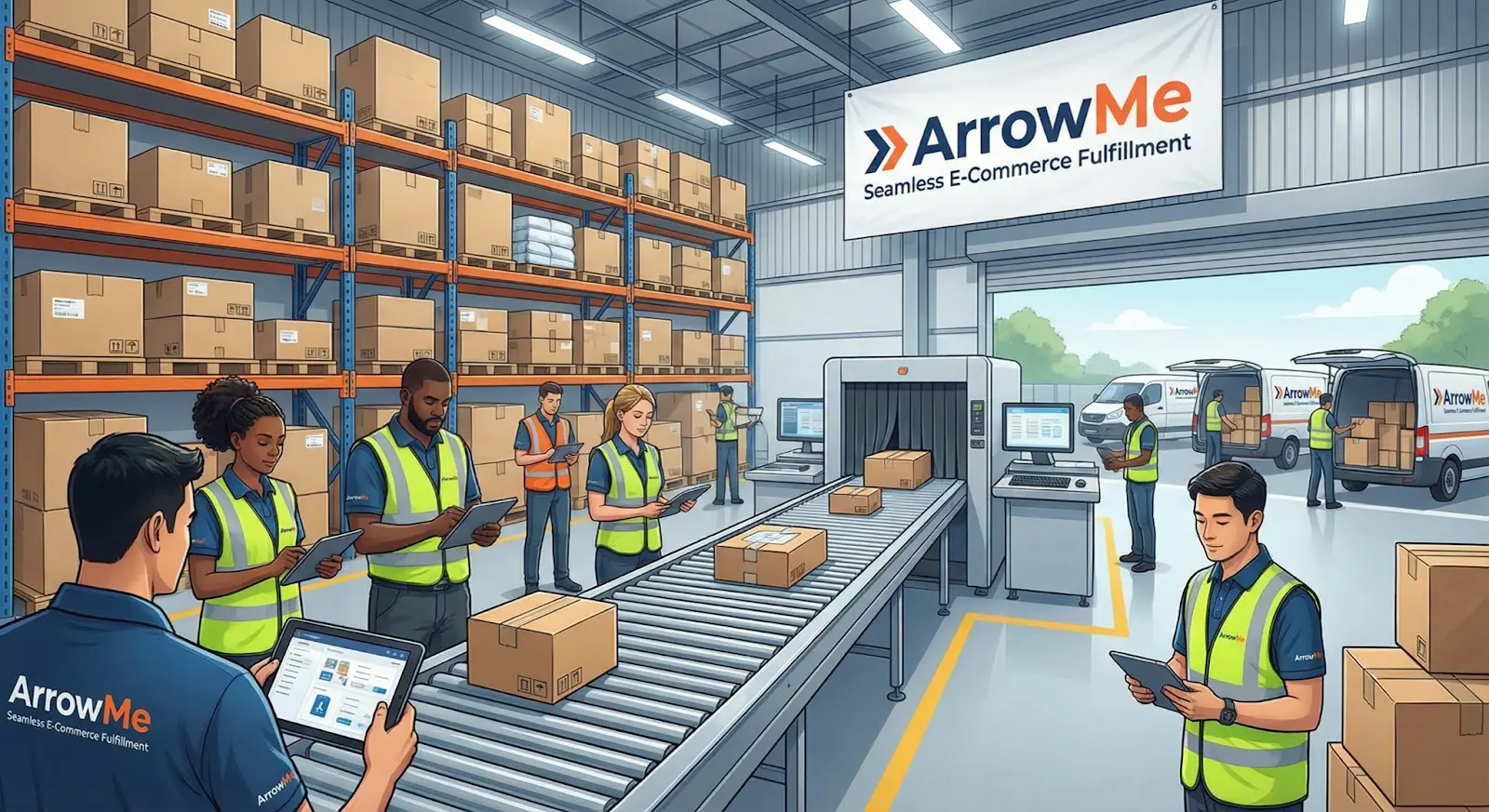
For Asia-Pacific brands managing cross-border operations, logistics costs consume 3-4 times more resources than they should—a direct result of fragmented, inefficient supply chains spanning multiple countries and currencies. The challenge is acute: a regional ecommerce logistics hub in Singapore offers a proven path to break this cycle, delivering 30-40% cost reductions while accelerating delivery speeds and improving customer satisfaction simultaneously.
The APAC e-commerce logistics market is exploding, expanding from USD 450 billion in 2024 to a projected USD 701 billion by 2030. Yet most regional brands still operate using outdated, siloed fulfillment models—maintaining separate warehouses in each country, negotiating individual shipping contracts, and managing inventory spread across multiple locations. This approach is bleeding money. Brands that recognize Singapore’s strategic position as a regional ecommerce logistics hub and consolidate operations are capturing massive competitive advantages. This guide reveals exactly how.
What is a Regional Ecommerce Logistics Hub and Why Singapore?
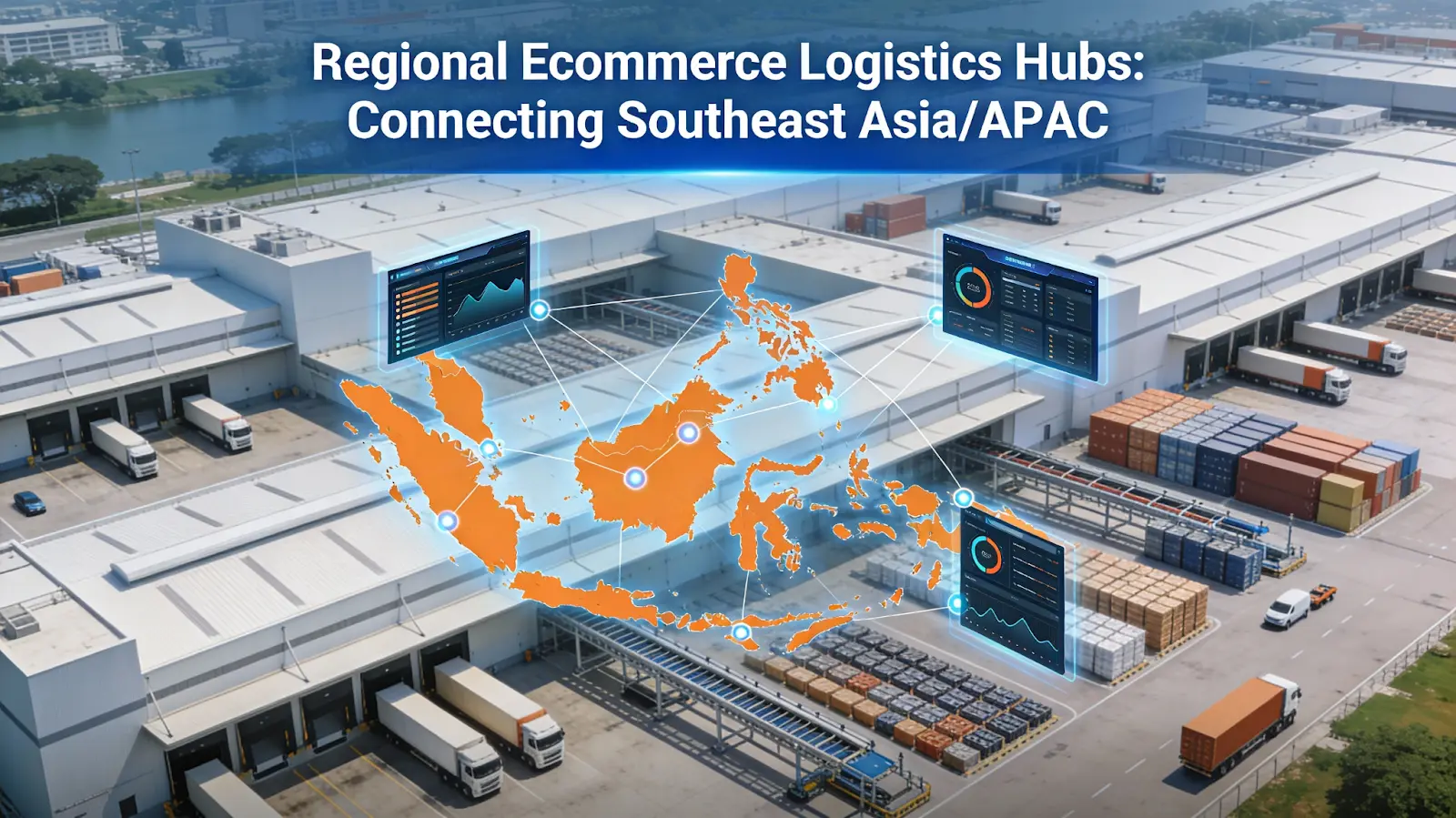
A regional ecommerce logistics hub is a centralized, strategically located warehouse facility that consolidates inventory from multiple suppliers, fulfills orders across an entire geographic region, and coordinates last-mile delivery through a network of local carriers. Rather than maintaining individual fulfillment centers in Thailand, Philippines, Indonesia, and Vietnam, brands operate through one optimized facility.
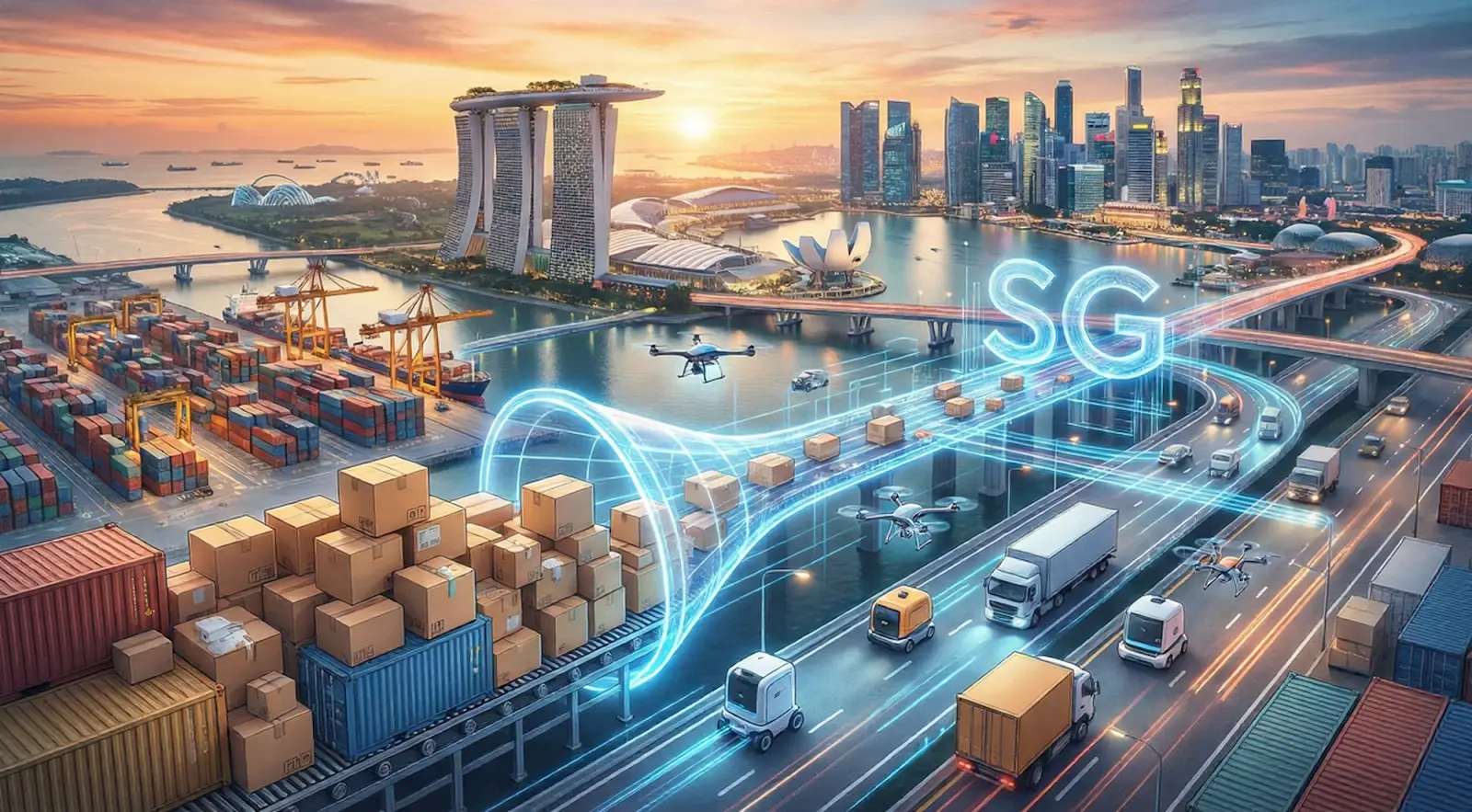
Singapore has become the natural choice for this role. Located at the crossroads of Southeast Asia, it offers:
- Unmatched infrastructure: World-class port and airport facilities connecting to 600+ global shipping routes
- Regulatory excellence: Pro-business policies, streamlined customs procedures, and digital connectivity
- Regional proximity: Two-day delivery to most of APAC; same-day to key city areas
- Talent and expertise: Multilingual workforce with supply chain expertise
- Technology infrastructure: 70% of APAC logistics companies investing in data analytics are headquartered or operate hubs in Singapore
- Free Trade Agreements (FTAs): Significant tariff advantages on goods moving through Singapore to regional markets
Nearly 50% of Asia-Pacific businesses plan to expand or build new operations in Southeast Asia within the next three years, and most recognize Singapore as the optimal distribution hub to orchestrate these regional initiatives.
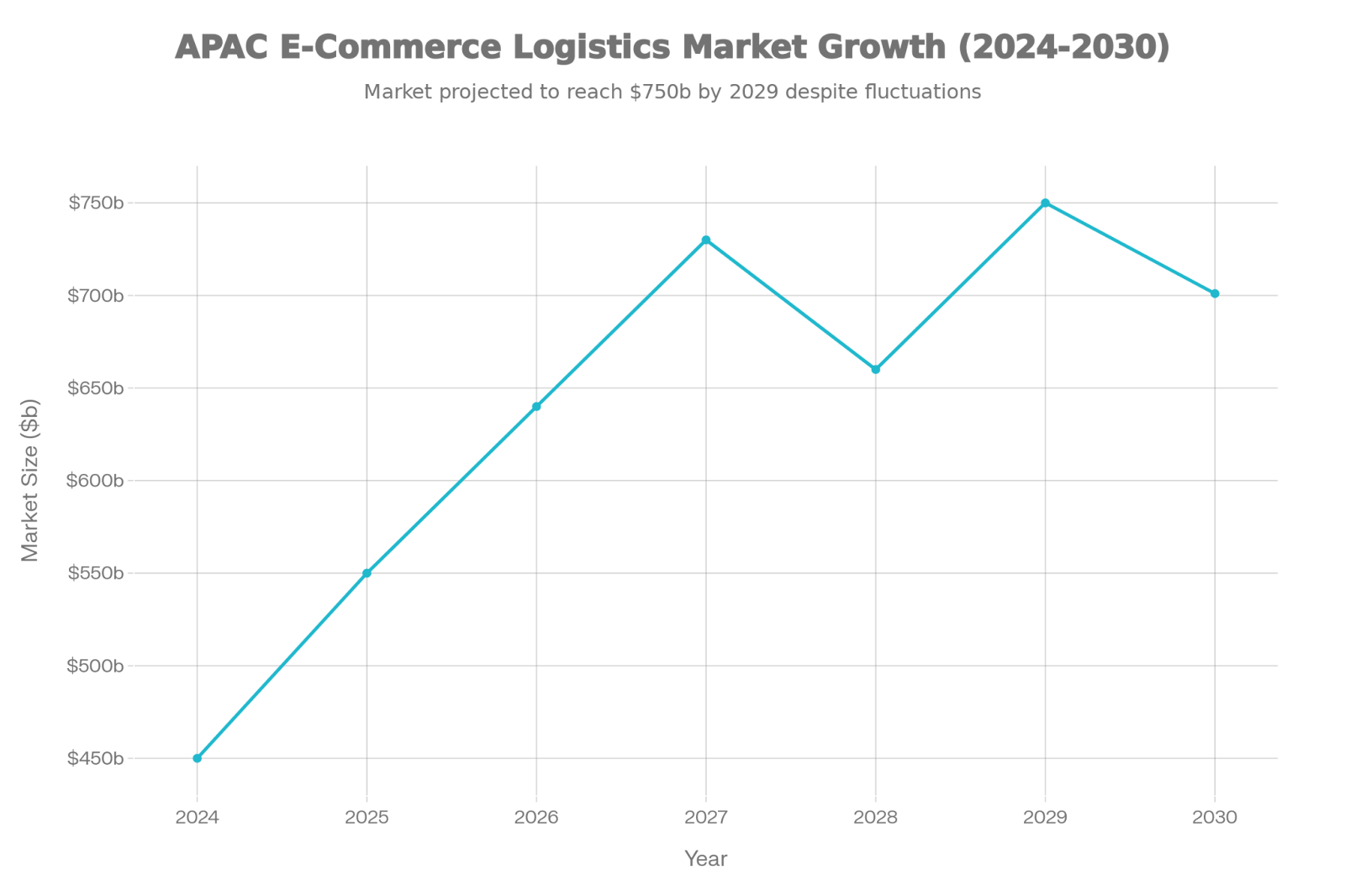
The Cost Crisis: Why APAC Logistics Are Broken
Before understanding how a regional ecommerce logistics hub solves cost problems, it’s essential to grasp the magnitude of the challenge. APAC logistics costs run 3-4 times higher than the international benchmark when measured as a percentage of goods sold. Why?
Infrastructure Gaps: Approximately 75% of roads in APAC are unsuitable for seamless vehicle movement, forcing drivers to operate at speeds nearly three times slower than in developed economies. This single factor cascades through the entire supply chain—longer delivery times, higher fuel consumption, and greater inventory carrying costs.
Fragmented Operations: Most brands maintain separate warehouses in multiple countries, each with its own staff, technology systems, and carrier contracts. This redundancy is expensive. A 5,000 sq ft warehouse in Bangkok, another in Manila, and a third in Jakarta might collectively handle 30,000 monthly orders. A centralized Singapore hub could process the same volume with one facility, one team, and unified systems—cutting warehouse operating costs by 40-50%.
Last-Mile Delivery Complexity: Last-mile delivery consumes 50-60% of total logistics spending. Managing final-mile delivery across five countries with different carrier networks, customs procedures, and regulations multiplies costs exponentially. A single regional carrier partnership through Singapore reduces these expenses dramatically.
Cross-Border Overhead: Every shipment crossing borders incurs customs documentation, duties, and regulatory compliance costs. By consolidating inventory in Singapore and then distributing from a single hub, brands reduce cross-border movements, cutting these hidden expenses by 25-35%.
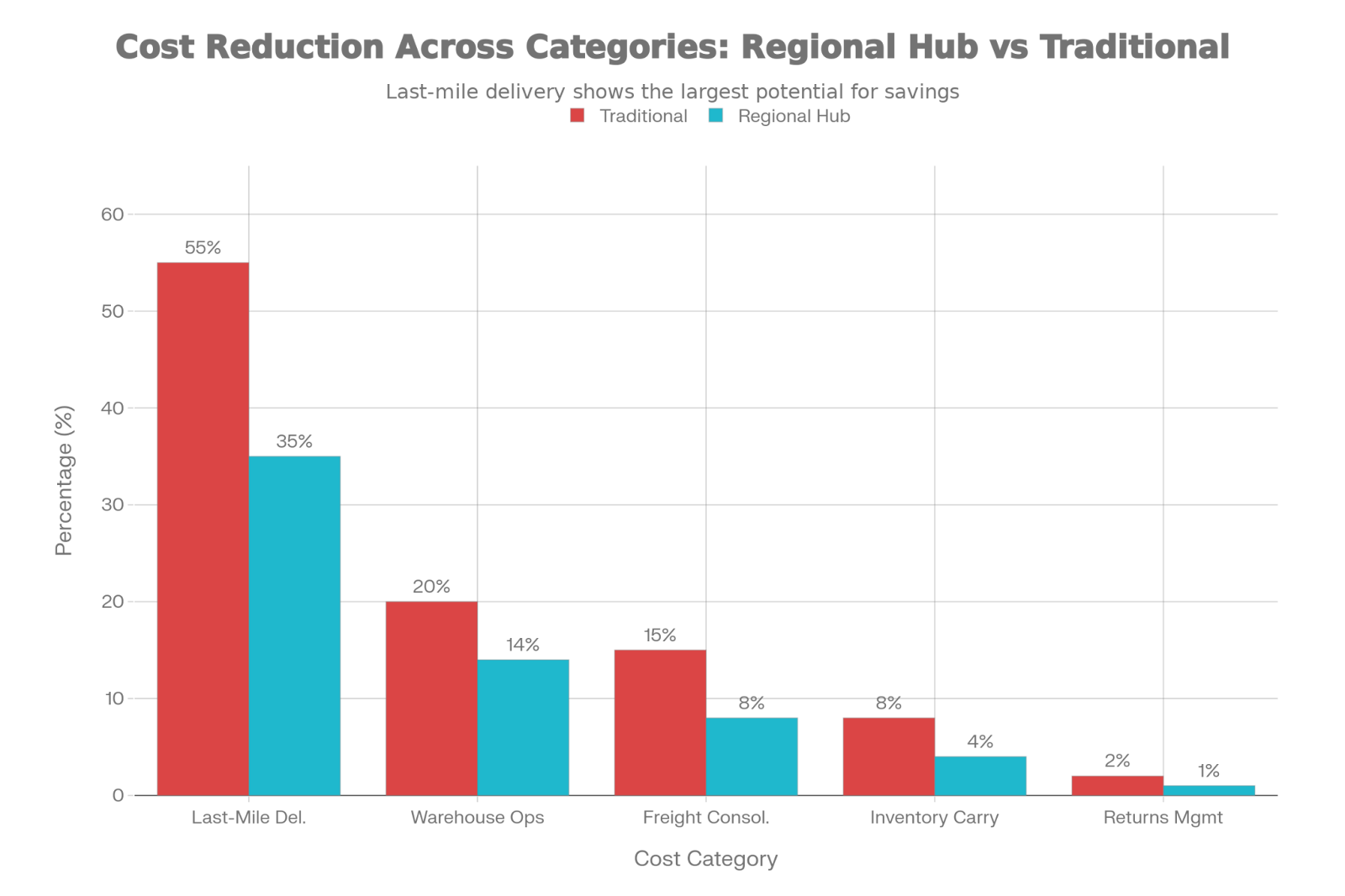
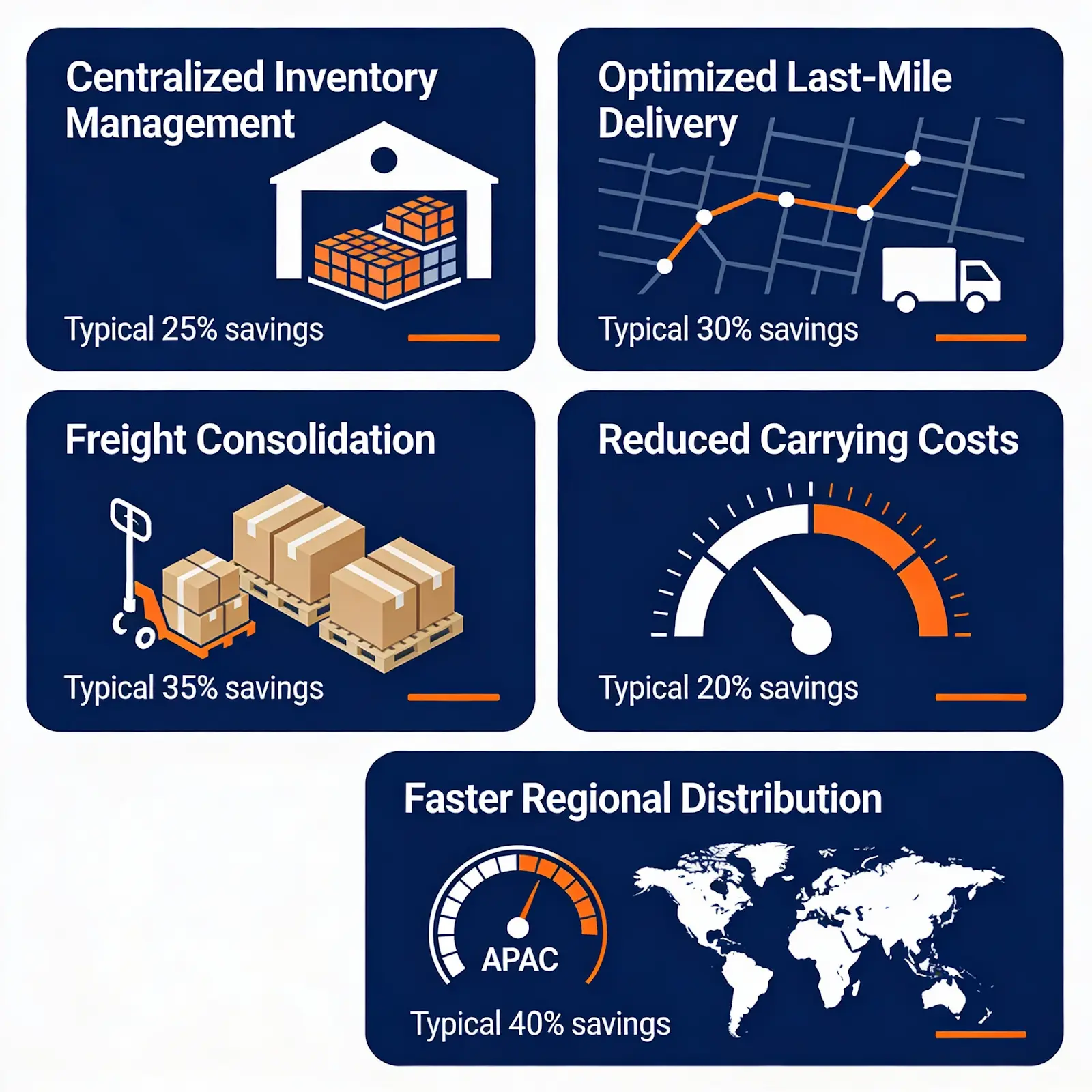
How a Regional Ecommerce Logistics Hub Reduces Costs: Five Mechanisms
1. Centralized Inventory Management and Freight Consolidation
Instead of maintaining fragmented inventory across multiple warehouses, a regional ecommerce logistics hub in Singapore consolidates stock at a single location. This delivers immediate benefits:
Reduced Carrying Costs: Inventory sitting in a warehouse is dead capital. By consolidating to one facility, brands reduce total inventory by 20-25% through better demand forecasting and visibility—each percentage point saved translates directly to lower carrying costs.
Freight Consolidation: Instead of shipping small quantities from multiple locations to customers, brands consolidate orders into full container loads through Singapore, then break bulk for regional delivery. Container shipping optimization alone saves up to 20% on transportation costs.
Real-Time Visibility: Central inventory management in Singapore through IoT-enabled systems provides real-time stock visibility. Brands can optimize reorder points, prevent stockouts, and minimize overstock situations that require expensive markdowns or storage extensions.
Example: A D2C brand selling across Thailand, Philippines, and Indonesia maintains 30% less total inventory by consolidating through a Singapore hub—saving SGD 80,000 annually in carrying costs alone.
2. Optimized Last-Mile Delivery Through Regional Carrier Networks
Ecommerce logistics in Singapore taps into established carrier networks and delivery infrastructure that spans the entire APAC region. The cost advantage is substantial:
Negotiated Volume Discounts: A centralized hub moving 100,000+ monthly shipments negotiates far better rates with carriers than individual countries could achieve alone. Volume-based pricing reductions average 20-30%.
AI-Powered Route Optimization: Modern fulfillment platforms use artificial intelligence to optimize delivery routes, considering traffic patterns, delivery windows, vehicle capacity, and customer preferences. Brands using AI route optimization report 15-20% reductions in delivery costs.
Reduced Handling: Fewer shipment touches = fewer costs. Through Singapore, a package might move: manufacture → consolidation → regional hub → last-mile carrier. Compare this to five separate country operations with 50%+ more touches and associated labor costs.
Last-Mile Flexibility: The hub offers multiple delivery options—standard courier, express, same-day in city areas, click-and-collect—allowing customers to choose based on their needs, reducing expensive expedited shipping volumes.
3. Warehouse Automation and Labor Optimization
A high-volume fulfillment warehouse in Singapore justifies investment in automation technologies that individual country warehouses cannot:
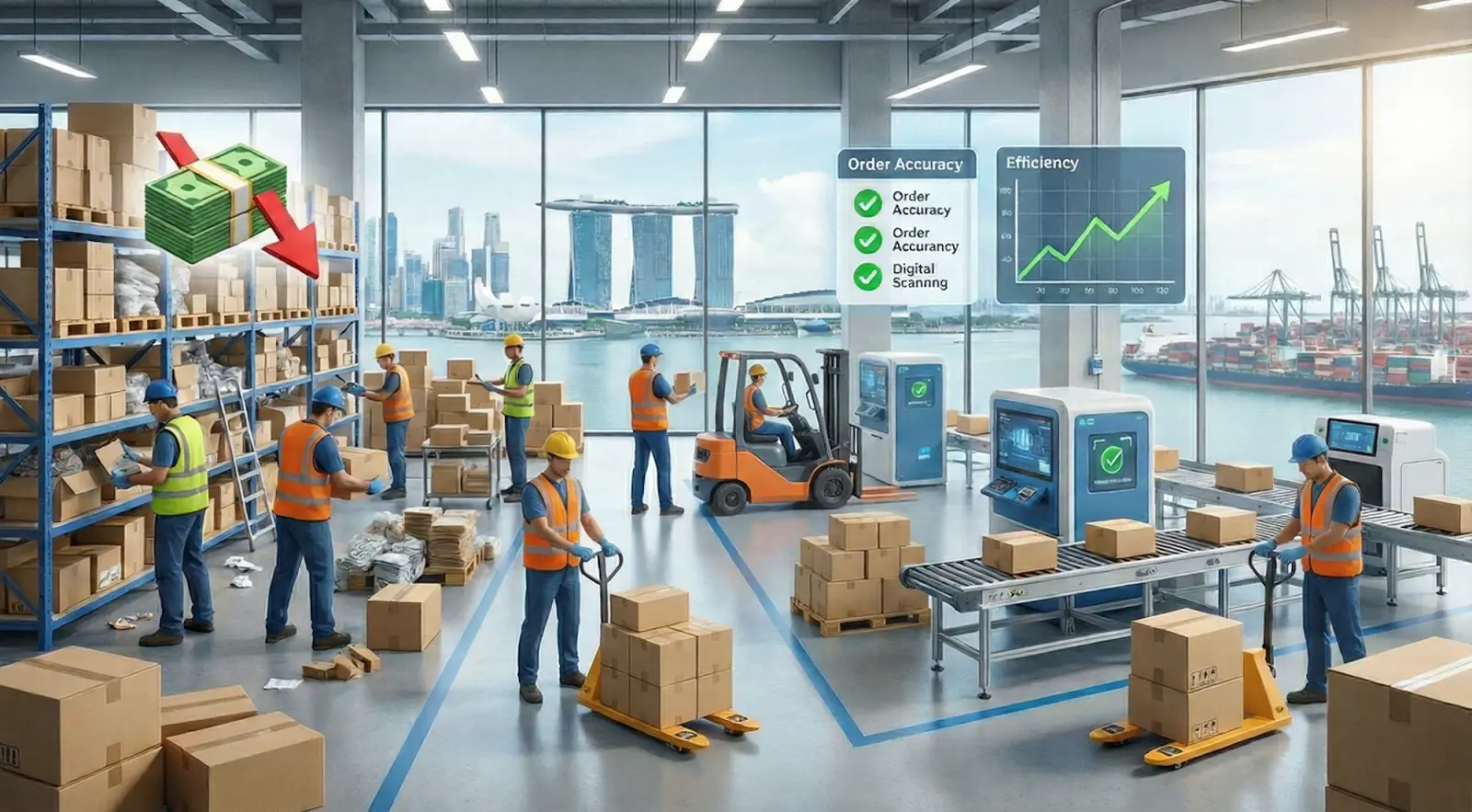
Robotic Picking and Packing: Automated Guided Vehicles (AGVs) and robotic arms handle repetitive tasks, reducing labor costs by 30-40% while improving accuracy. A system with robotics processes 50% more orders in the same timeframe compared to manual operations.
Intelligent Sorting: Automated sortation systems direct packages to correct regional destinations without manual sorting, cutting labor and errors.
Real-Time Monitoring: Warehouse management systems provide constant visibility into operations, enabling instant identification of bottlenecks and inefficiencies.
Economies of Scale: One centralized facility with 200 employees is far more efficient than three separate warehouses each needing 80-100 employees. Fixed costs distribute across higher volume, reducing per-unit expenses.
4. Reduced Regulatory and Compliance Complexity
Each country in APAC has different customs procedures, tax regulations, and compliance requirements. A regional ecommerce logistics hub simplifies this dramatically:
Pre-Clearance Benefits: By pre-clearing goods through Singapore’s customs authority, regional distribution becomes simpler. The hub handles documentation, duties, and compliance; local distribution focuses on logistics.
Standardized Processes: One fulfillment standard applied across the region beats five different processes. Staff training, quality assurance, and performance monitoring become streamlined and cost-effective.
Tax Optimization: Singapore’s FTA network provides tariff advantages on goods imported for regional distribution. These savings often exceed 5-8% of landed costs for certain product categories.
Compliance Certainty: PDPA compliance, workplace safety standards, and environmental regulations are consistently maintained at one facility rather than inconsistently across multiple locations.
5. Access to Advanced Technology Infrastructure
The 3PL providers operating regional hubs in Singapore—including specialized providers focused on ecommerce—invest heavily in technology:
Real-Time Tracking: Customers receive immediate, accurate tracking information from order placement through delivery.
Demand Forecasting: AI-powered analytics predict demand patterns across regions, enabling proactive inventory management rather than reactive scrambling.
Integration Capabilities: Modern hubs integrate with ecommerce platforms (Shopify, Lazada, Shopee), payment processors, and carrier systems through APIs, eliminating manual data entry and enabling automation.
Performance Dashboards: Brands access real-time metrics on order fulfillment rates, accuracy, delivery speed, and costs—enabling data-driven decision-making.
The APAC Outsourcing Boom: Why Now Is the Time
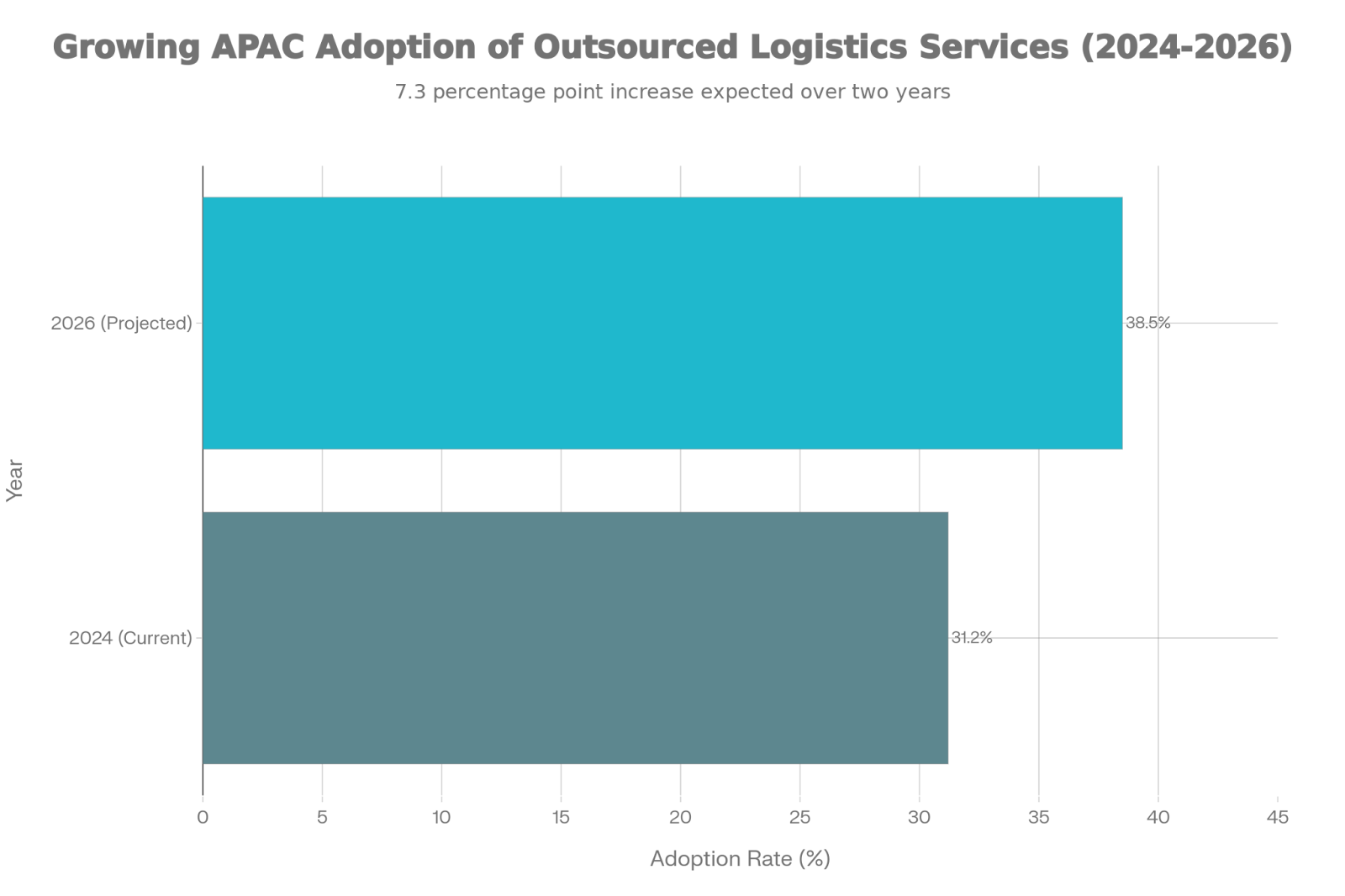
The timing for consolidating through a regional ecommerce logistics hub is perfect. Currently, 31.2% of APAC companies outsource their logistics functions. This number is projected to reach 38.5% by 2026—a 24% increase in just two years. Why this acceleration?
Rising complexity: Cross-border operations are becoming too complex for in-house management. Brands need specialists.
Cost pressure: Ecommerce margins are compressing. Logistics optimization is one of the last levers to pull for profitability.
Technology barriers: Advanced logistics technologies (AI optimization, IoT tracking, automation) require specialized expertise most brands lack.
Scaling demands: Growth requires logistics scaling; outsourcing avoids massive capital investments.
Risk reduction: Outsourcing distributes risk across a professional operator rather than betting everything on in-house execution.
Brands waiting until 2027-2028 to make this transition will find themselves competing against optimized regional players—a race that’s impossible to win.
Real-World Outcomes: What Brands Achieve
Speed: Reducing average delivery time from 4.5 days (APAC benchmark) to 2-3 days across the region.
Accuracy: Achieving 99.5% order accuracy versus typical 96-97% with fragmented systems.
Cost: Reducing logistics costs by 30-40% as a percentage of revenue through all the mechanisms described above.
Scalability: Growing from 5,000 to 50,000 monthly orders without proportional cost increases.
Customer Satisfaction: Transparent tracking, flexible delivery options, and reliable service drive repeat purchases and positive reviews.