Introduction: The Moment Fulfilment Becomes a Growth Constraint
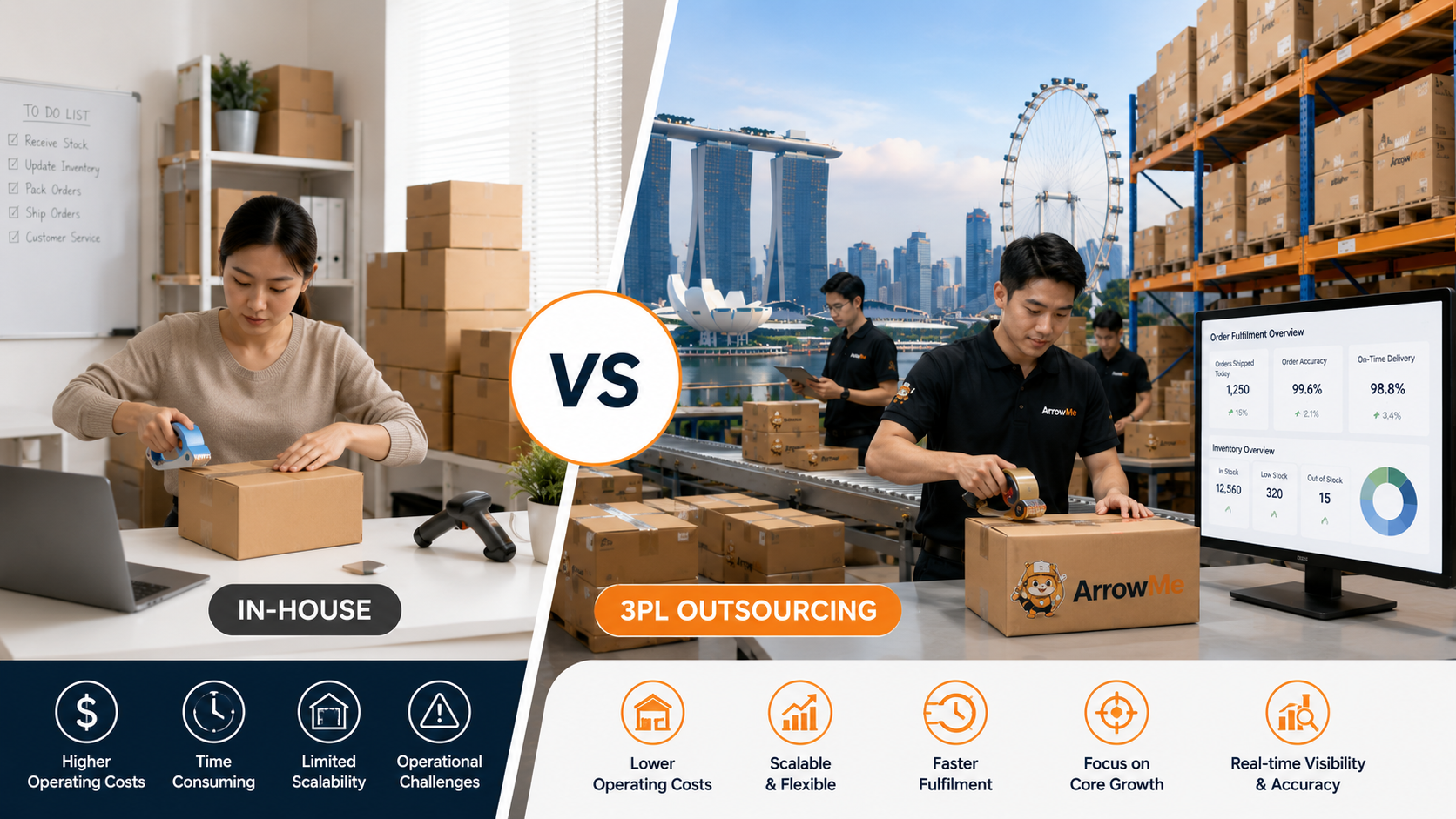
There is a predictable inflection point in every growing ecommerce brand’s journey. Orders are coming in faster than the team can process them. Warehouse space is running out. Shipping costs are rising without a proportional improvement in delivery speed. Customer complaints about late or incorrect orders are increasing, and management is spending more time fixing logistics problems than building the business. At this point, the instinct is to hire more staff, find a bigger warehouse, and push harder. The smarter move is to outsource.
Ecommerce fulfilment in Singapore has matured into a sophisticated, technology-driven service sector that allows brands to access enterprise-grade warehouse infrastructure, real-time inventory systems, and established carrier networks—without the capital investment of building those capabilities in-house. For growing brands in 2026, outsourcing fulfilment is not a compromise. It is a strategic decision that directly accelerates growth while protecting margins.
What Outsourcing Ecommerce Fulfilment in Singapore Actually Means
Outsourcing ecommerce fulfilment in Singapore means handing your warehousing, pick-and-pack, inventory management, and outbound shipping operations to a dedicated third-party logistics partner. Your products live in their facility. Their systems manage your stock levels. Their team picks, packs, and dispatches your orders. Their carrier relationships get your parcels to customers.
What you retain is complete visibility through real-time dashboards, full control over your brand standards and packaging requirements, and the freedom to focus entirely on product development, marketing, and customer acquisition—the activities that actually differentiate your brand in a competitive market.
Seven Reasons Growing Brands Are Outsourcing Fulfilment in 2026
1. Eliminate Fixed Costs Without Sacrificing Capability
Building in-house fulfilment requires significant investment in warehouse leases, shelving, warehouse management software, packing equipment, and a full-time operations team. These are fixed costs that accumulate regardless of whether you are shipping 500 or 5,000 orders per month.
A professional 3PL provider converts those fixed costs into variable, per-order fees. You pay for storage consumed, orders processed, and shipments dispatched—nothing more. During slow seasons, costs naturally contract. During peak campaigns, capacity expands without capital outlay. This pay-as-you-use model is one of the most powerful financial levers available to scaling ecommerce brands.
2. Access Technology You Cannot Afford to Build Alone
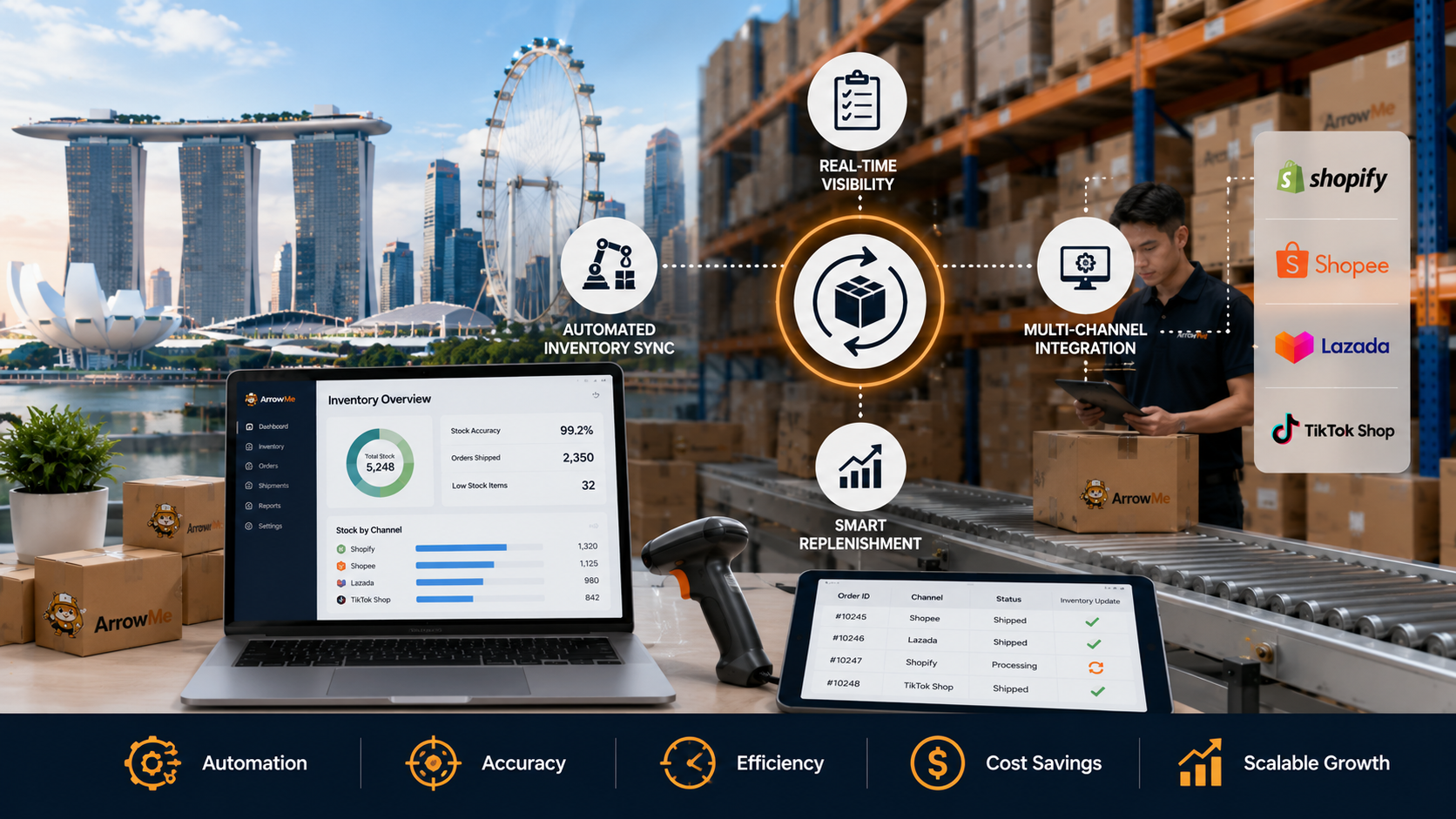
Leading ecommerce logistics in Singapore partners invest heavily in warehouse management systems, RFID and barcode scanning infrastructure, AI-powered demand forecasting, and real-time API integrations with Shopee, Lazada, TikTok Shop, and Shopify. These systems cost millions to build and require dedicated technical teams to maintain.
By outsourcing to a professional 3PL provider, you access this infrastructure through your monthly service fees. Real-time inventory visibility, automated reorder triggers, directed picking sequences, and live shipment tracking are standard features—not expensive add-ons.
3. Improve Order Accuracy and Delivery Speed Immediately
Manual fulfilment operations typically achieve 96–97% order accuracy. Professional fulfilment warehouses using scan-verify workflows routinely achieve 99%+. The difference translates directly to fewer returns, fewer support tickets, fewer refunds, and more repeat customers.
Speed improves for the same reason. A professional fulfillment warehouse in Singapore processes orders using optimised pick sequences that reduce warehouse travel time by 40–50%, compressing order cycle times from 48+ hours to consistently under 24 hours. Faster, more accurate fulfilment is not a marginal improvement—it is a customer retention mechanism.
4. Scale Seamlessly Through Peaks and Growth Phases
Ecommerce demand is inherently volatile. A campaign on 11.11, a product going viral on TikTok, or a seasonal spike can multiply daily order volumes three to five times overnight. In-house operations cannot absorb this without expensive pre-investment in staff and space that sit idle the rest of the year.
An outsourced ecommerce fulfilment in Singapore partner absorbs these spikes across its shared infrastructure. Additional labour, additional packing stations, and additional carrier capacity are all available on demand—without the brand needing to manage any of it.
5. Free Your Team to Focus on Growth
Every hour your team spends managing warehouse operations, resolving picking errors, chasing carriers, and reconciling inventory is an hour not spent on product development, marketing strategy, or customer relationships. These are the activities that build brand equity and competitive advantage.
Outsourcing ecommerce logistics in Singapore removes this operational burden entirely. Your fulfilment partner owns the execution. You own the growth strategy. The brands scaling fastest in Singapore in 2026 have made exactly this trade-off—and the results show in their revenue trajectory.
6. Unlock Better Carrier Rates and Delivery Networks
A 3PL provider consolidates shipment volumes across dozens of clients, achieving the scale needed to negotiate meaningfully better carrier rates than any individual brand could access independently. Volume-based discounts of 20–30% below published carrier rates are standard at this scale, and those savings flow directly to your cost per order.
Beyond pricing, professional fulfilment partners maintain active relationships with multiple last-mile carriers, routing each shipment to the optimal carrier based on destination, parcel weight, and current service performance. Failed delivery rates drop. Delivery windows tighten. Customer satisfaction improves without any additional effort from your team.
7. Gain a Foundation for Regional Expansion
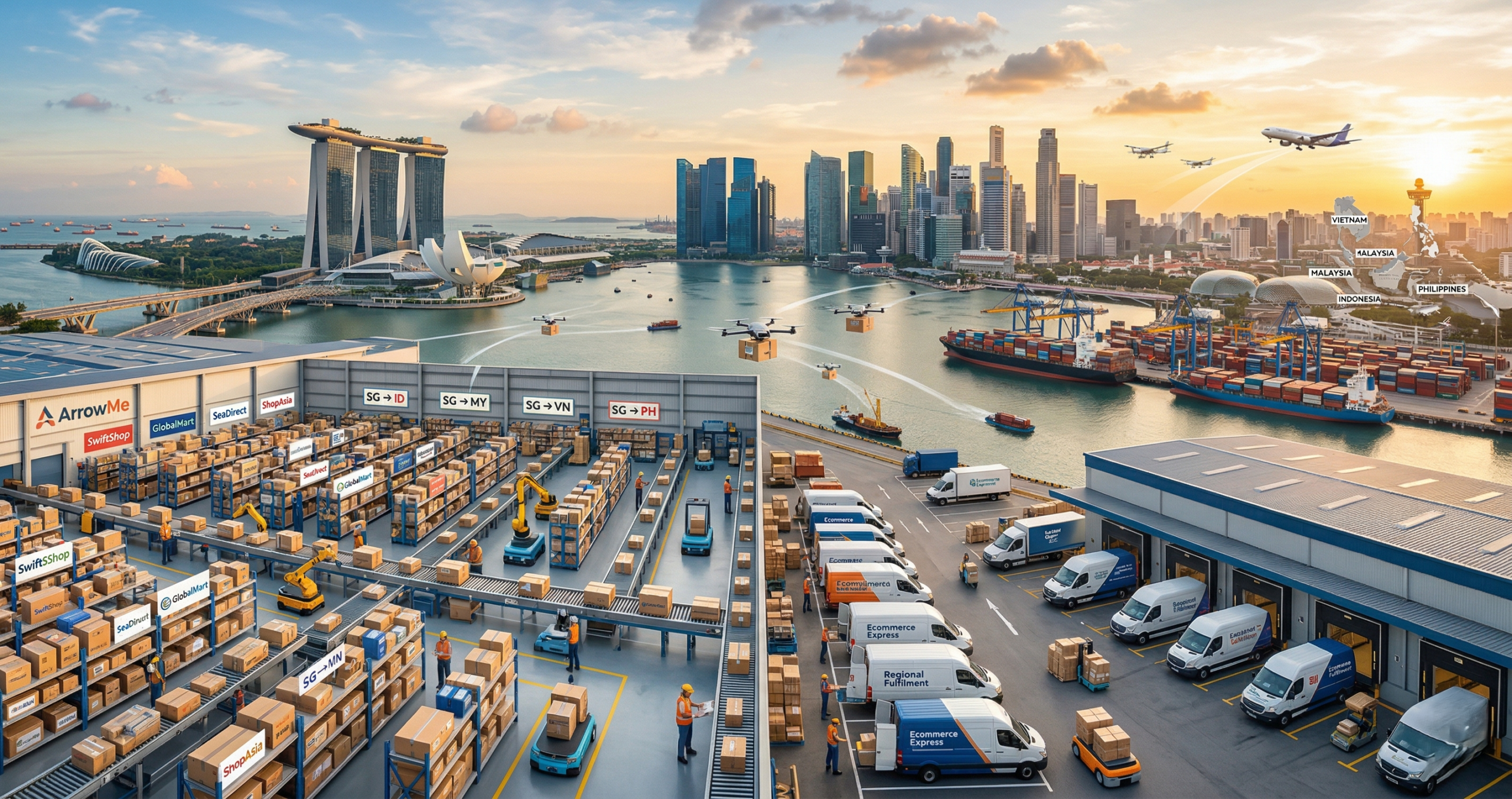
For brands with APAC ambitions, outsourcing ecommerce fulfilment in Singapore is the most capital-efficient way to build a regional distribution capability. Singapore’s position at the geographic centre of Southeast Asia, combined with its Free Trade Zone facilities, streamlined customs infrastructure, and established carrier networks across the region, makes it the ideal base for cross-border fulfilment into Malaysia, Indonesia, Thailand, Vietnam, and the Philippines.
A professional 3PL provider operating in Singapore has already built the carrier relationships, customs expertise, and platform integrations needed for regional fulfilment. Rather than replicating logistics infrastructure in each new market, brands distribute from a single Singapore hub and reach regional customers through the 3PL’s established networks.
What to Look for in an Ecommerce Fulfilment Partner in Singapore
Choosing the right partner matters as much as the decision to outsource. Evaluate prospective partners against these criteria:
- Real-time platform integration: Native API connections with every channel you sell on—not scheduled batch syncs
- Documented accuracy performance: Ask for order accuracy and on-time dispatch rates; best-in-class partners operate above 99%
- Transparent, scalable pricing: Per-order and per-unit storage fees that contract and expand with your volume
- Inventory management depth: Real-time cycle counting, automated reorder triggers, and unified multi-channel stock management
- Regional capability: Established cross-border carrier relationships and customs expertise across your target APAC markets
- Dedicated account management: A partner that proactively flags issues before they become customer-facing problems
ArrowMe’s approach to ecommerce fulfilment in Singapore combines all of these elements. By offering a fully integrated fulfillment warehouse in Singapore with real-time inventory management in Singapore and cross-border distribution capability, ArrowMe enables brands—like BMS Organics, which faced mounting inventory complexity and growing cross-channel demand—to scale operations without scaling operational burden.
Frequently Asked Questions
Q: When is the right time to outsource ecommerce fulfilment in Singapore?
A: Most brands find outsourcing financially beneficial from 300–500 orders per month. At this volume, the 3PL’s carrier rate savings alone typically offset per-order service fees. The operational case—freeing internal teams and eliminating management overhead—applies at almost any volume.
Q: Will we lose visibility into our inventory when outsourcing?
A: No. Professional fulfilment partners provide real-time dashboard access to inventory levels, order status, and fulfilment performance across every channel. Most brands report significantly better inventory visibility after outsourcing than they had managing operations in-house.
Q: How long does onboarding typically take?
A: Most brands go from signed agreement to live fulfilment within 15–30 days, covering technology integration, inventory migration, staff training, and a parallel-running validation period. Simpler setups can go live in 7 days.
Q: Can our fulfilment partner handle returns processing as well?
A: Yes. Full-service ecommerce logistics in Singapore partners manage the complete reverse logistics cycle—receiving returns, assessing condition, restocking sellable units, and processing defective items—as part of their standard offering.
Conclusion: Outsourcing Fulfilment Is How Growing Brands Grow Faster
The brands that scale successfully in Singapore’s ecommerce market in 2026 are not the ones working hardest on logistics. They are the ones who recognised that logistics is a specialist discipline—and handed it to specialists.
Outsourcing ecommerce fulfilment in Singapore gives your brand immediate access to infrastructure, technology, and carrier relationships that would take years and significant capital to build independently. It converts fixed costs to variable ones, improves accuracy and delivery speed from day one, and provides the regional distribution foundation that APAC expansion demands.
The operational ceiling holding your business back is removable. The right fulfilment partner removes it—and keeps it from coming back as you grow.