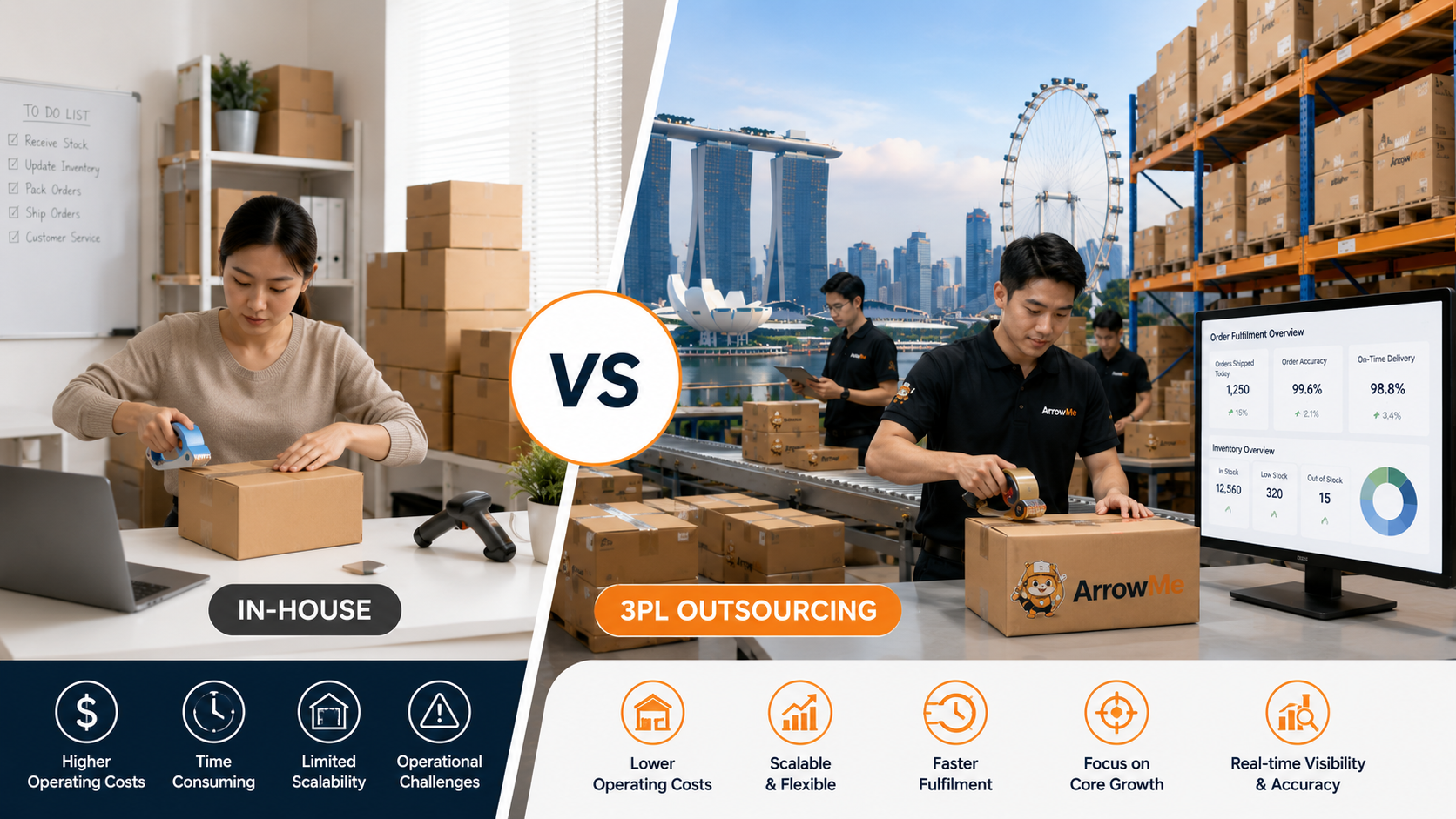
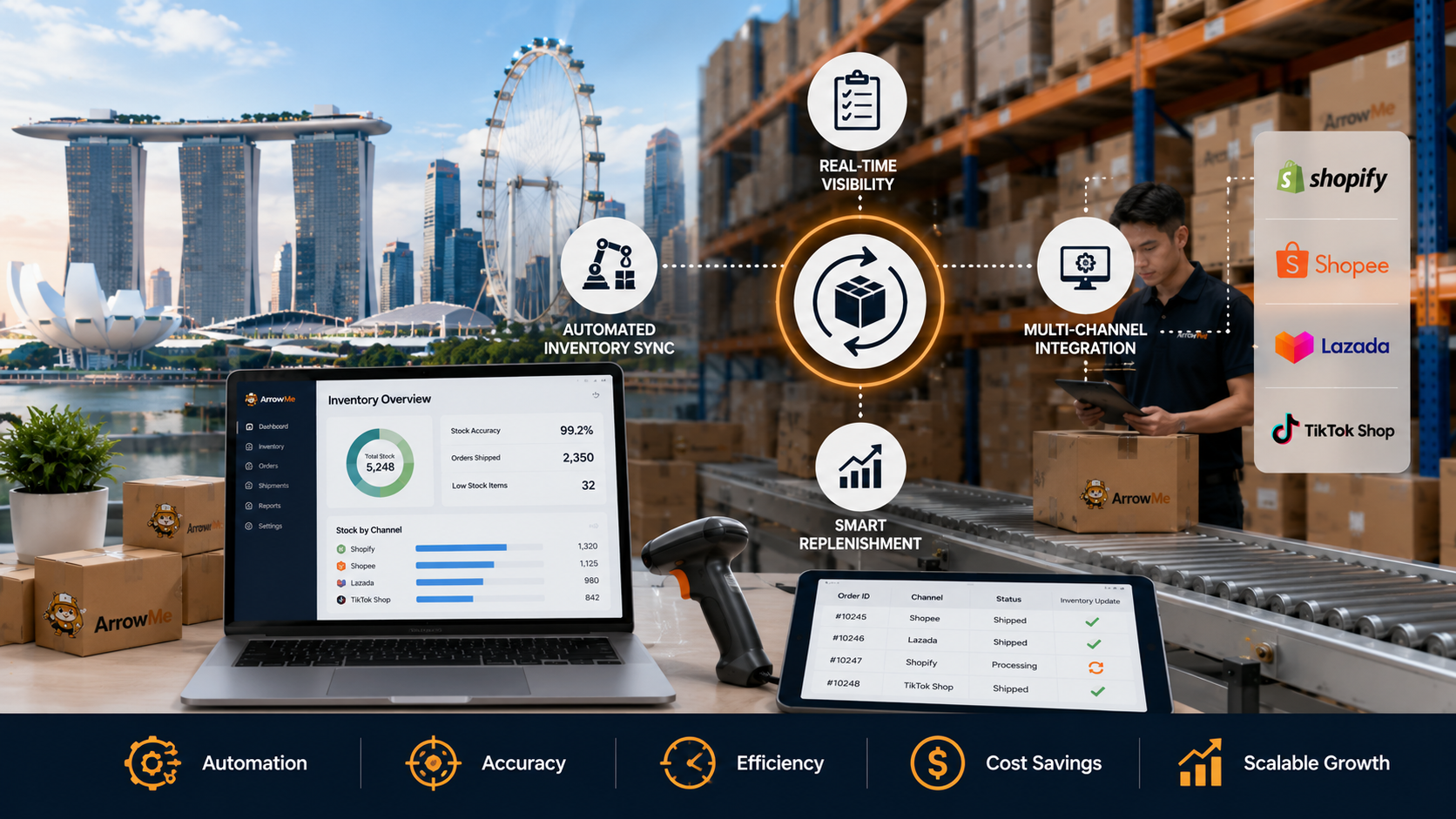
I met Kenneth three months ago at a Shopee seller meetup in Paya Lebar. He runs a home fragrance brand that’s been growing steadily—about 800 orders a month across Shopee, Lazada, and his own Shopify store. When I asked how his ecommerce fulfilment in Singapore was going, he pulled up his 3PL invoice on his phone.
“I thought I was paying SGD 3 per order,” he said. “But last month’s bill came to SGD 4,200 for 720 orders. That’s SGD 5.83 each. I don’t even know where the extra charges came from.”
Kenneth isn’t alone. Across Singapore, SME ecommerce sellers are discovering that ecommerce fulfilment in Singapore pricing is nowhere near as simple—or as cheap—as the sales pitch suggested. Hidden fees, vague line items, and surprise charges are turning what should be a straightforward partnership into a monthly guessing game that’s quietly bleeding margins.
If you’ve ever looked at your 3PL invoice and thought “this doesn’t add up,” this article will show you exactly what’s broken, what you should actually be paying, and how to fix it without starting from scratch.
Why Ecommerce Fulfilment Pricing in Singapore Is Broken for SMEs
The core problem isn’t that fulfilment is expensive—it’s that most SMEs have no idea what they’re really paying for until the first invoice arrives.
Here’s how it typically happens: you reach out to a fulfillment warehouse in Singapore for a quote. They tell you storage is “SGD 55 per cubic meter per month” and pick-and-pack is “SGD 1.85 per order.” Sounds reasonable. You sign up.
Three months later, you’re seeing charges for:
- “Receiving discrepancy handling” — SGD 45
- “Special packaging rework” — SGD 80
- “Long-term storage surcharge” — SGD 120
- “Account management fee” — SGD 150
- “System access” — SGD 50
None of this was in the original quote. And when you ask your account manager about it, you get a response like “those are standard industry practices” or “it’s in section 7.3 of the service agreement.”
According to industry research, hidden 3PL fees usually stem from unclear service definitions rather than deliberate overcharging. Common culprits include receiving discrepancies, relabeling, returns inspection beyond standard scope, special projects, and minimum monthly charges that were mentioned verbally but never clearly documented.
The result? Most Singapore SMEs processing 500-1,000 orders monthly end up paying SGD 4.50 to SGD 6.50 per order when they budgeted for SGD 2.50 to SGD 3.50. That 50-80% cost overrun doesn’t just hurt margins—it forces sellers to either raise prices (losing competitiveness) or absorb the loss (losing profitability).
What Ecommerce Fulfilment in Singapore Should Actually Cost
Let’s break down transparent, market-rate pricing for ecommerce fulfilment in Singapore so you know what’s reasonable and what’s inflated.
Storage Fees
What you should pay: SGD 25-55 per cubic meter per month, depending on location and facility quality.
Red flags:
- “Long-term storage surcharges” that kick in after 60-90 days without clear notice
- Dimensional estimates that are “adjusted” upward after your stock arrives
- Separate fees for “bin storage” or “shelf storage” on top of cubic meter rates
What it covers: Physical space, climate control (if applicable), security, and basic inventory tracking.
Pick-and-Pack Fees
What you should pay: SGD 2 to SGD 3 per order for standard single-SKU orders. Multi-SKU orders typically add SGD 0.20-0.50 per additional item picked.
Red flags:
- “Complexity fees” for orders that aren’t actually complex
- Separate “packing material fees” when basic materials should be included
- Per-scan charges for barcode verification (this should be standard, not an add-on)
What it covers: Picking items from shelves, packing into appropriate packaging, applying shipping labels, and quality verification
Shipping Costs
What you should pay: This varies by courier and weight, but a good ecommerce logistics in Singapore partner should pass through preferential carrier rates they’ve negotiated through volume—typically 20-30% below published retail rates.
For Singapore domestic parcels under 1kg, expect SGD 2.50-4.50. For regional shipping (Malaysia, Indonesia), expect SGD 6-12 depending on destination and service level.
Red flags:
- Shipping rates that match or exceed what you could negotiate directly with couriers yourself
- “Handling fees” added on top of shipping costs
- Fuel surcharges that mysteriously never go down even when fuel prices drop
What it covers: Courier pickup, transit, and delivery to customer’s door.
Receiving and Inbound Fees
What you should pay: SGD 35-50 per inbound shipment for the first 2 hours, then SGD 45-60 per hour for additional handling. Some providers offer per-unit receiving (SGD 0.10-0.30 per unit).
Red flags:
- “Discrepancy handling” charges when the 3PL miscounts your shipment
- “Relabeling fees” for SKUs that were labeled correctly to begin with
- Receiving fees charged per carton and per unit
What it covers: Unloading your stock, counting units, checking against your manifest, and putting items into warehouse locations.
Returns Processing
What you should pay: SGD 1.50-3.00 per returned item for inspection, restock decision, and inventory update.
Red flags:
- Returns fees that exceed pick-and-pack fees (they shouldn’t—returns are often simpler)
- “Quarantine storage” fees for items awaiting inspection
- Charging full pick-pack rates to restock items that were never defective
What it covers: Receiving the return, inspecting condition, grading (resellable/damaged/discard), updating inventory, and restocking or quarantining as appropriate.
The Hidden Fees You Need to Watch For
Based on research into 3PL billing practices across Singapore and the region, here are the most common surprise charges SMEs discover too late:
1. Minimum Monthly Charges
Some providers require a minimum monthly spend (e.g., SGD 500-1,000) regardless of actual order volume. If your orders don’t hit that threshold, you pay the minimum anyway.
Solution: Ask explicitly during negotiations: “Is there a monthly minimum? What happens if my volume is below it?”
2. Account Management or Platform Access Fees
Monthly charges of SGD 50-200 for “account support” or “system access” that were never mentioned in the initial quote.
Solution: Get a sample invoice before signing. Ask them to mark every fee you’ll see, including the ones they consider “standard.”
3. Special Project Fees
Vague charges for “ad hoc tasks,” “special handling,” or “customization” that appear without prior approval.
Solution: Include contract language that requires written approval for any charges beyond standard services.
E-Commerce Fulfillment in Singapore: Scaling Smarter in a Competitive Market – Clarion
4. Dimensional Weight Adjustments
Shipping charges recalculated after the fact because the 3PL claims your packaging is bulkier than disclosed.
Solution: Provide exact dimensions and weights during onboarding. Ask the 3PL to confirm these before billing starts.
5. GST Surprises
If your 3PL is GST-registered (most are), their fees include 9% GST. If you’re not GST-registered (annual turnover under SGD 1 million), that 9% is a real cost you can’t claim back.
Solution: Factor 9% GST into your budget calculations from day one.
The 5-Step Fix: How to Get Transparent Ecommerce Fulfilment Pricing
Step 1: Demand a Blended Cost-Per-Order Estimate
Don’t settle for line-item pricing alone. Ask every prospective fulfillment warehouse in Singapore: “Based on my profile—X orders per month, Y SKUs, Z average items per order—what’s my total blended cost per order including storage, pick-pack, and shipping?”
This forces them to give you a realistic number you can budget around.
Step 2: Request a Sample Invoice Before Signing
Ask the provider to show you a real invoice from a client with a similar profile (names redacted). Look for every line item. If you see charges you don’t understand, ask for clarification before you commit.
Step 3: Negotiate Fixed or Bundled Pricing
Some providers offer simplified, all-inclusive models: one flat rate per order that includes storage (up to a certain volume), pick-pack, and standard packaging.
Example: YouMart’s Merchant Plan charges SGD 2.50 per pick-pack, with SGD 55/cbm storage and delivery from SGD 3.50. That’s transparent and predictable.
Step 4: Lock Down “No Surprise Fees” Contract Language
Add a clause that requires the 3PL to get your written approval before charging for any services beyond the agreed scope. This stops “special project” fees from appearing unannounced.
Step 5: Track Cost-Per-Order Monthly
Don’t just pay invoices—analyze them. Calculate your total fulfilment cost divided by total orders each month. If it’s drifting upward, investigate why immediately. Unchecked cost creep compounds fast.
What Fair Pricing Actually Looks Like
For a Singapore SME selling 500-1,000 orders monthly with average product dimensions and standard packaging, here’s what transparent ecommerce fulfilment in Singapore pricing should land at:
- Storage: SGD 0.30-0.60 per order (amortized)
- Pick-and-pack: SGD 2-3 per order
- Shipping: SGD 2.50-4.50 per domestic order
- Receiving: SGD 0.10-0.30 per unit (amortized across monthly volume)
- Returns: SGD 1.50-3.00 per returned item
Total blended cost: SGD 4.50-7.50 per order for standard domestic fulfilment.
If you’re consistently paying above SGD 6 per order, you’re either handling very large/heavy products, paying for premium services, or paying hidden fees that shouldn’t exist.
Frequently Asked Questions
Q: Is it normal for my 3PL invoice to vary by 20-30% month-to-month?
Some variation is normal if your order volume or storage levels fluctuate. But if the per-order cost is varying significantly, that’s a red flag. Transparent pricing should produce predictable per-order costs even when volume changes.
Q: Should I be charged for “account management” separately?
Some providers include account management in their per-order fees; others charge it as a flat monthly fee (SGD 100-200). Both models are legitimate, but it should be disclosed upfront. If it appears on your invoice for the first time three months in, that’s a transparency failure.
Q: What’s a fair price for inventory management in Singapore?
Inventory management in Singapore at a professional fulfillment warehouse should include real-time tracking, cycle counts, and multi-channel syncing as part of base services—not as add-ons. If you’re being charged separately for “system access” or “inventory updates,” push back.
Q: Are there any 3PLs in Singapore with no-contract, pay-as-you-go models?
Yes. Providers like ArrowMe logistics offer no lock-in contracts and free initial storage periods, letting you test the service without long-term commitment. This model works well for SMEs that need flexibility while they validate growth.
Q: How much should cross-border fulfilment cost from a regional ecommerce logistics hub?
Cross-border shipping from Singapore to Malaysia typically runs SGD 6-10 per parcel; to Indonesia/Thailand, SGD 10-15, depending on weight and service level. A true regional ecommerce logistics hub should offer these rates through consolidated volume discounts, not retail pricing.
The Bottom Line
Ecommerce fulfilment in Singapore doesn’t have to be opaque, unpredictable, or full of surprise charges. The problem isn’t the service—it’s how it’s sold and billed.
When you know what transparent pricing looks like, what hidden fees to watch for, and which questions to ask before signing, you shift from being a cost-absorber to a cost-controller. That SGD 2-3 per order difference between opaque and transparent providers compounds dramatically over thousands of orders.
For Kenneth, the home fragrance seller I mentioned at the start, the fix was straightforward: he switched to a provider with bundled per-order pricing and no surprise fees. His blended cost dropped from SGD 5.83 to SGD 4.10 per order. Over 800 monthly orders, that’s SGD 1,384 saved every month—SGD 16,608 annually. That’s marketing budget. That’s new product development. That’s profit that wasn’t disappearing into vague line items.
If your current ecommerce logistics in Singapore setup feels like a black box, it’s not because fulfilment has to be complicated. It’s because someone is profiting from your confusion.
The fix starts with asking better questions—and refusing to accept vague answers.
References used:
- Bray Solutions (2026). “Understanding the True Costs of 3PL Services (No Hidden Fees).” Retrieved from:
- https://braysolutions.com/blog/understanding-the-true-costs-of-3pl-what-ecommerce-businesses-really-pay-and-why/
- Clarion Shipping (2025). “Singapore’s Role in Ecommerce Fulfillment for Southeast Asia.” Retrieved from:
- https://www.clarionshipping.com/en-sg/blog/singapore-role-in-ecommerce-fulfillment-for-southeast-asia/
- Invoice Data Extraction (2026). “3PL Hidden Fees: The Independent Guide for Ecommerce Brands.” Retrieved from:
- https://invoicedataextraction.com/blog/3pl-hidden-fees-billing-transparency
- Locad (2023). “Singapore’s Trusted E-Commerce Fulfillment Center for Online Brands.” Retrieved from:
- https://golocad.com/fulfillment/fulfillment-center-in-singapore/
- OneCart (2026). “A Founder’s Guide to 3PL in Singapore for Ecommerce Growth 2026.” Retrieved from:
- https://www.getonecart.com/3-pl-in-singapore/
- Reddit r/logistics (2025). “Hidden charges to look out for with a 3PL?” Retrieved from:
- https://www.reddit.com/r/logistics/comments/1n8tu54/hidden_charges_to_look_out_for_with_a_3pl/
- ShipBob (2026). “How to Calculate & Reduce Fulfillment Costs.” Retrieved from:
- https://www.shipbob.com/ecommerce-fulfillment/fulfillment-costs/
- ShipSage (2026). “3PL Pricing Fees Explained.” Retrieved from:
- https://shipsage.com/3pl-pricing-fees-explained/
- uParcel (2026). “Ecommerce Enabler Costs in Singapore: Prices & Services Explained.” Retrieved from:
- https://www.uparcel.sg/blog/ecommerce-enabler-costs-in-singapore-prices-services-explained
- ZoomZoomShip (2026). “What Is 3PL Warehousing? A Complete Guide for Singapore Businesses.” Retrieved from:
- https://www.zoomzoomship.com/2026/04/23/what-is-3pl-warehousing-a-complete-guide-for-singapore-businesses/