Ecommerce Logistics in Singapore has become a critical growth function for brands that want to scale efficiently, reduce delivery friction, and serve customers across Singapore and the wider Southeast Asian market. As online competition intensifies and customer expectations for fast, accurate shipping continue to rise, choosing the right 3PL Provider is no longer a tactical decision—it is a strategic one.
For growing brands, Ecommerce Logistics in Singapore is about far more than storage and delivery. It includes inventory visibility, platform integrations, warehouse efficiency, order accuracy, returns handling, and regional expansion readiness. This guide explains the real costs involved, the ecommerce platforms that matter, and what to evaluate before choosing a logistics partner.
Why Ecommerce Logistics in Singapore Matters More in 2026
Singapore is one of Southeast Asia’s most advanced ecommerce markets. Customers expect quick fulfilment, transparent tracking, and consistent service across every buying channel. That means brands need logistics operations that can support same-day, next-day, and cross-border delivery without creating margin pressure.
Strong Ecommerce Logistics in Singapore helps brands solve five core challenges:
- Faster order processing
- Better inventory accuracy
- Lower fulfilment errors
- Scalable shipping operations
- Regional market access through a centralized hub
For brands selling through Shopify, Shopee, Lazada, TikTok Shop, or multiple channels at once, logistics is often the main difference between smooth growth and operational chaos.
What Is Included in Ecommerce Logistics in Singapore?
At a practical level, Ecommerce Logistics in Singapore includes every operational step between receiving stock and delivering an order to the customer.
That usually includes:
- Inbound receiving and put-away
- Storage in a fulfillment warehouse in Singapore
- Pick-and-pack operations
- Shipping label generation
- Courier handoff and last-mile delivery
- Returns processing
- Real-time inventory management in Singapore
- Platform and marketplace integration
A capable 3PL Provider manages these functions through connected systems, standard operating procedures, and scalable warehouse infrastructure. This allows brands to focus on sales, brand building, and customer acquisition instead of running daily fulfilment operations.
Typical Costs to Expect
One of the biggest questions brands ask is: how much does Ecommerce Logistics in Singapore actually cost?
The answer depends on order volume, SKU count, storage needs, packaging complexity, and delivery zones. But most fulfilment pricing usually falls into these categories:
Storage Fees
Charged by pallet, bin, shelf, or cubic meter, depending on the warehouse setup and product profile.
Receiving Fees
Applied when incoming stock is unloaded, checked, counted, and stored.
Pick-and-Pack Fees
Charged per order, often with additional charges for multiple items, inserts, kitting, or custom packaging.
Shipping Fees
Based on parcel size, weight, destination, and courier service level.
Returns Handling Fees
Charged when returned items must be inspected, restocked, repacked, or flagged as damaged.
A professional 3PL Provider should offer transparent pricing with no vague hidden charges. More importantly, the lowest price is not always the best value. A cheap provider with poor accuracy, weak systems, or slow dispatch can cost more in customer churn and support overhead than a slightly higher-priced but better-performing partner.
Which Ecommerce Platforms Should a Logistics Partner Support?
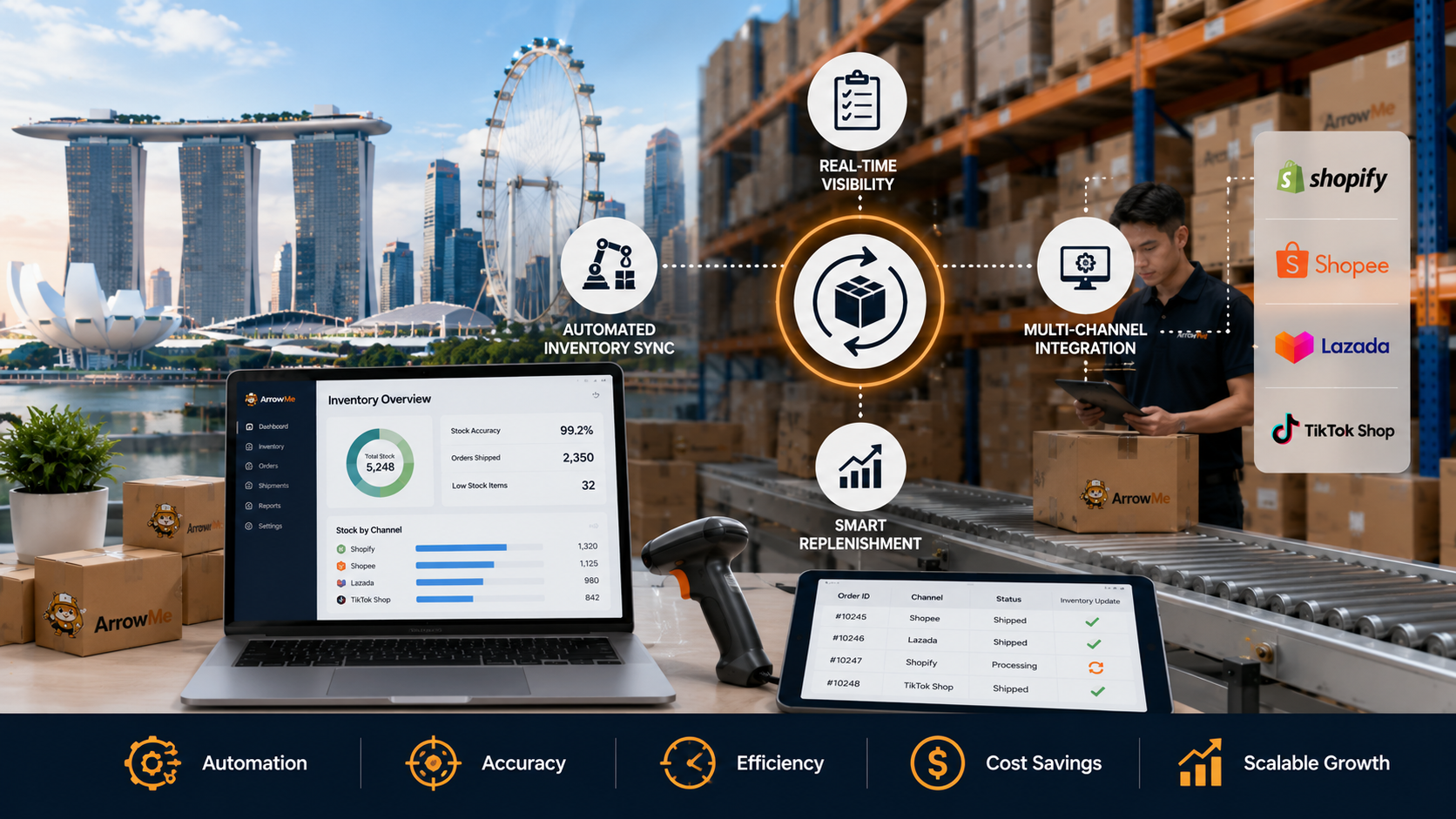
Modern brands rarely sell on a single channel. That is why the best Ecommerce Logistics in Singapore partners integrate directly with the platforms where your customers are buying.
Your logistics partner should ideally support:
- Shopify
- WooCommerce
- Lazada
- Shopee
- TikTok Shop
- Magento
- Custom ecommerce stores via API
- ERP and order management systems where required
Why does this matter? Because disconnected systems create fulfilment delays, overselling issues, and inventory mismatches. Good inventory management in Singapore depends on real-time or near-real-time syncing between sales channels and the warehouse.
If a 3PL Provider cannot connect properly to your ecommerce stack, you will spend more time fixing operational gaps than scaling your business.
What to Look for in a 3PL Partner
Choosing a 3PL Provider should be treated like choosing a long-term growth partner, not just a warehouse vendor.
1. Strong Platform Integrations
Your partner should connect smoothly with your ecommerce and marketplace channels so orders flow automatically and stock updates stay accurate.
2. Reliable Inventory Visibility
Real-time or highly accurate inventory management in Singapore is essential. If your stock counts are wrong, everything else breaks—overselling, delayed fulfilment, customer complaints, and lost revenue.
3. Scalable Warehouse Operations
A quality fulfillment warehouse in Singapore should be able to support growth without disrupting service. That includes peak season readiness, clear pick-pack workflows, and the ability to scale labour and storage when needed.
4. Order Accuracy and SLA Clarity
Ask about order accuracy rates, cut-off times, dispatch timelines, and error resolution procedures. Service levels should be measurable, not vague.
5. Transparent Communication
The right 3PL Provider should proactively communicate stock issues, delivery exceptions, and operational risks before they affect your customers.
6. Returns Handling Capability
Returns are part of ecommerce reality. Your partner should have a clear and efficient process for receiving, inspecting, restocking, or quarantining returned items.
7. Regional Readiness
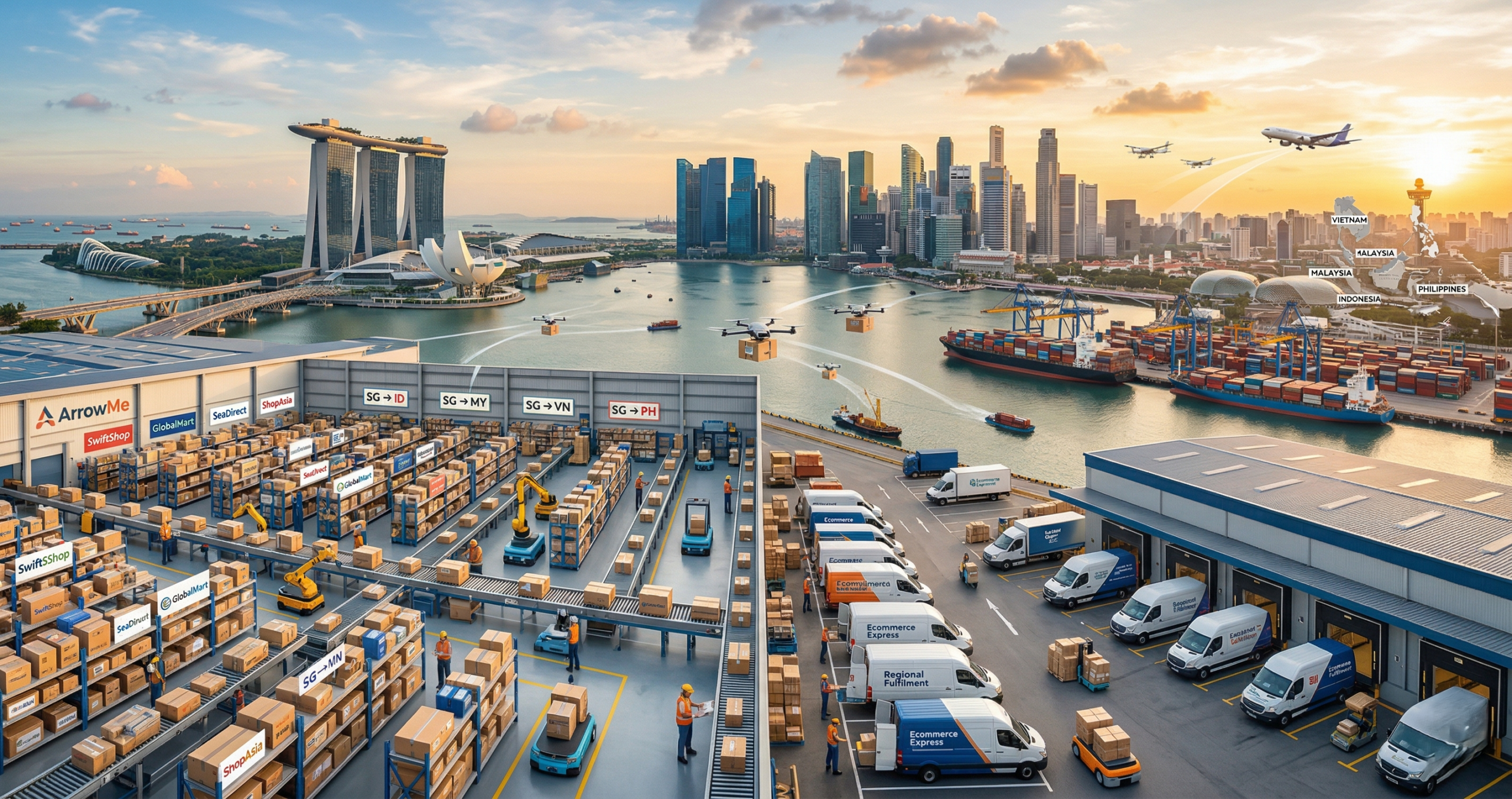
If your business plans to expand beyond Singapore, your provider should be able to support regional fulfilment planning. That includes customs familiarity, cross-border shipping coordination, and a network that supports Southeast Asian growth.
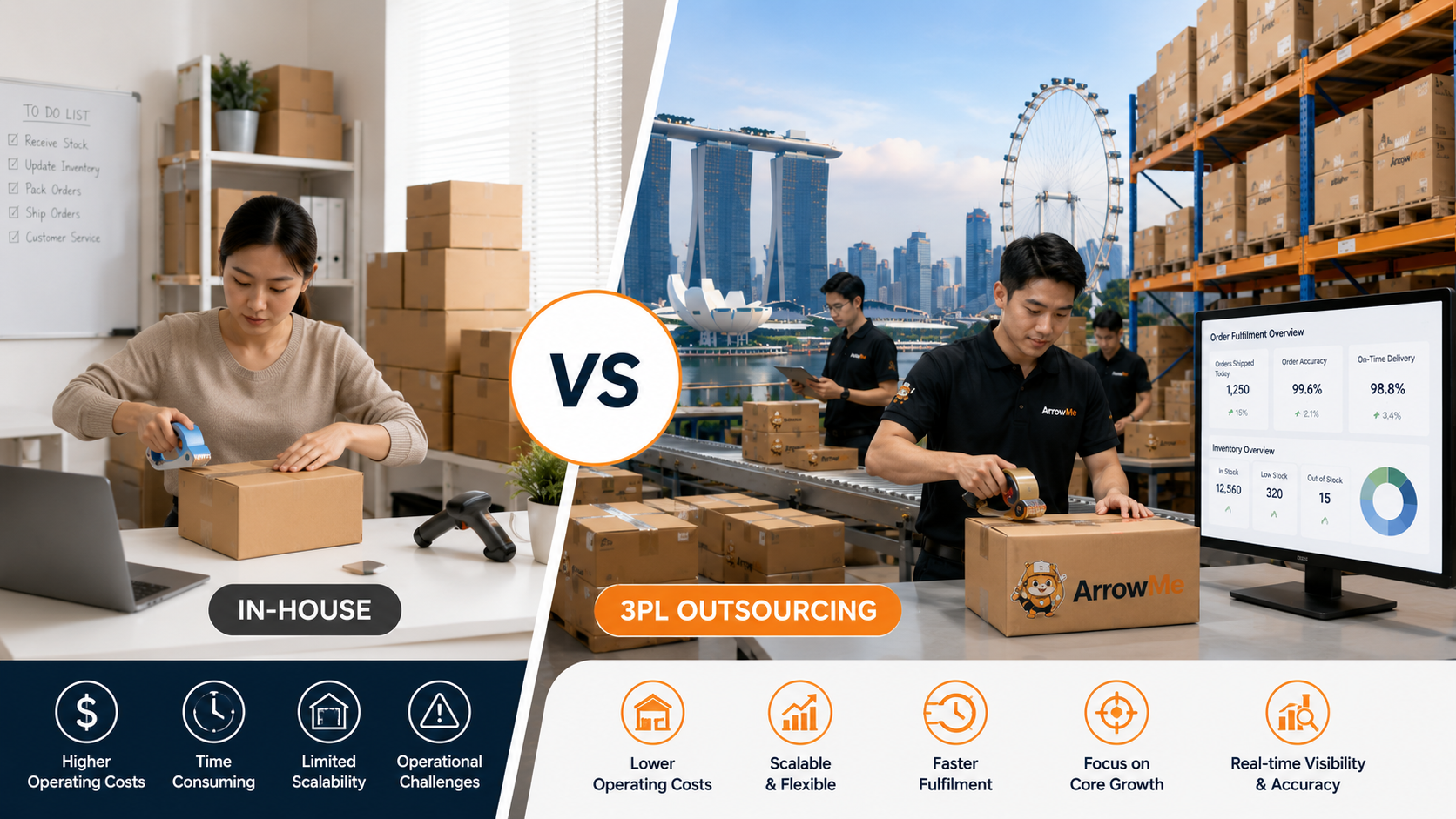
Why Outsourcing Makes Sense for Growing Brands
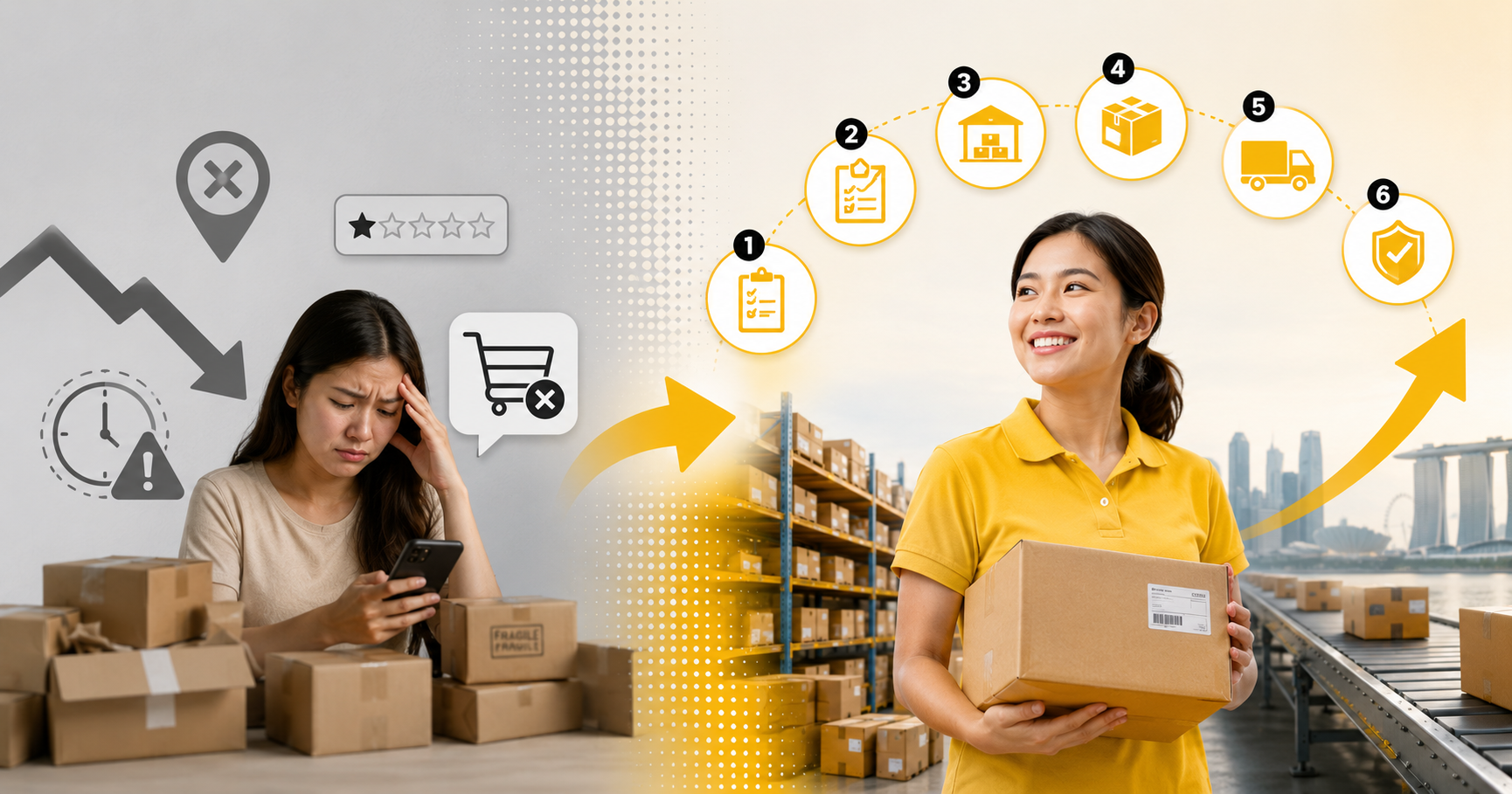
For many brands, outsourcing ecommerce fulfilment in Singapore is the fastest way to move from operational strain to sustainable growth.
Instead of investing in warehouse leases, scanners, shelving, manpower, software, and courier management, brands can plug into an existing logistics ecosystem that already has the infrastructure in place. This reduces capital expenditure, shortens setup time, and improves operational flexibility.
A strong 3PL Provider also helps brands:
- Launch faster
- Reduce fixed overhead
- Improve order accuracy
- Manage peaks more effectively
- Free internal teams to focus on growth
That is especially valuable in Singapore, where warehouse space and labour efficiency directly affect margins.
Common Mistakes to Avoid
When evaluating Ecommerce Logistics in Singapore, avoid these common mistakes:
- Choosing based only on lowest price
- Ignoring platform integration depth
- Overlooking returns workflows
- Failing to ask about reporting and dashboards
- Assuming all warehouses offer the same service quality
- Not checking how the provider handles peak periods
The right logistics setup should not only solve today’s fulfilment needs but also support where your brand will be in the next 12 to 24 months.
Final Thoughts
As ecommerce matures, logistics has become one of the strongest drivers of customer experience, profitability, and scale. The brands that win in 2026 will not just market better—they will fulfil better.
If you are evaluating Ecommerce Logistics in Singapore, the real goal is not simply to find warehouse space. It is to find a 3PL Provider that can combine operational reliability, strong integrations, responsive service, and scalable infrastructure into one dependable partnership.
That is what turns logistics from a cost center into a growth engine.