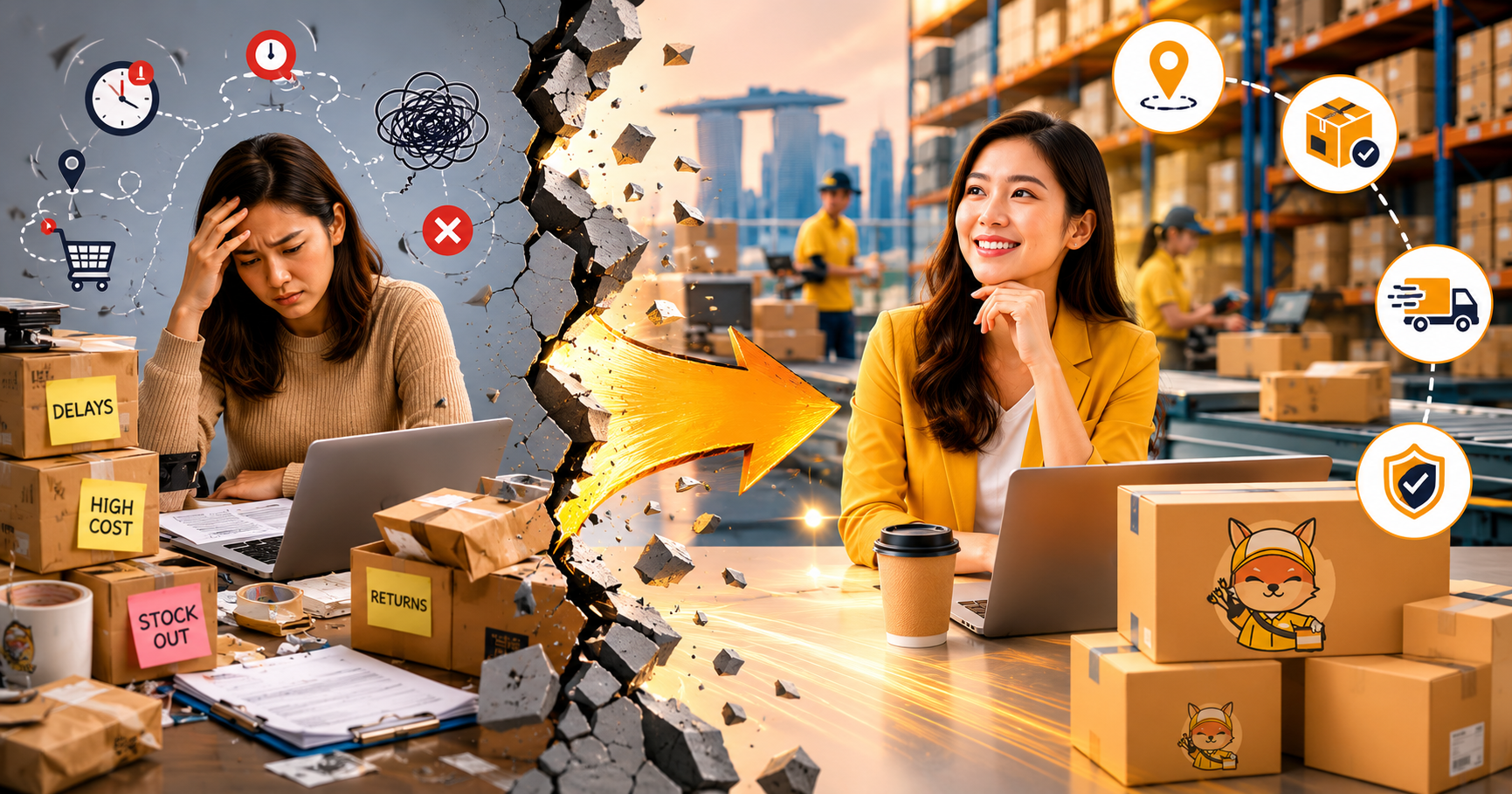
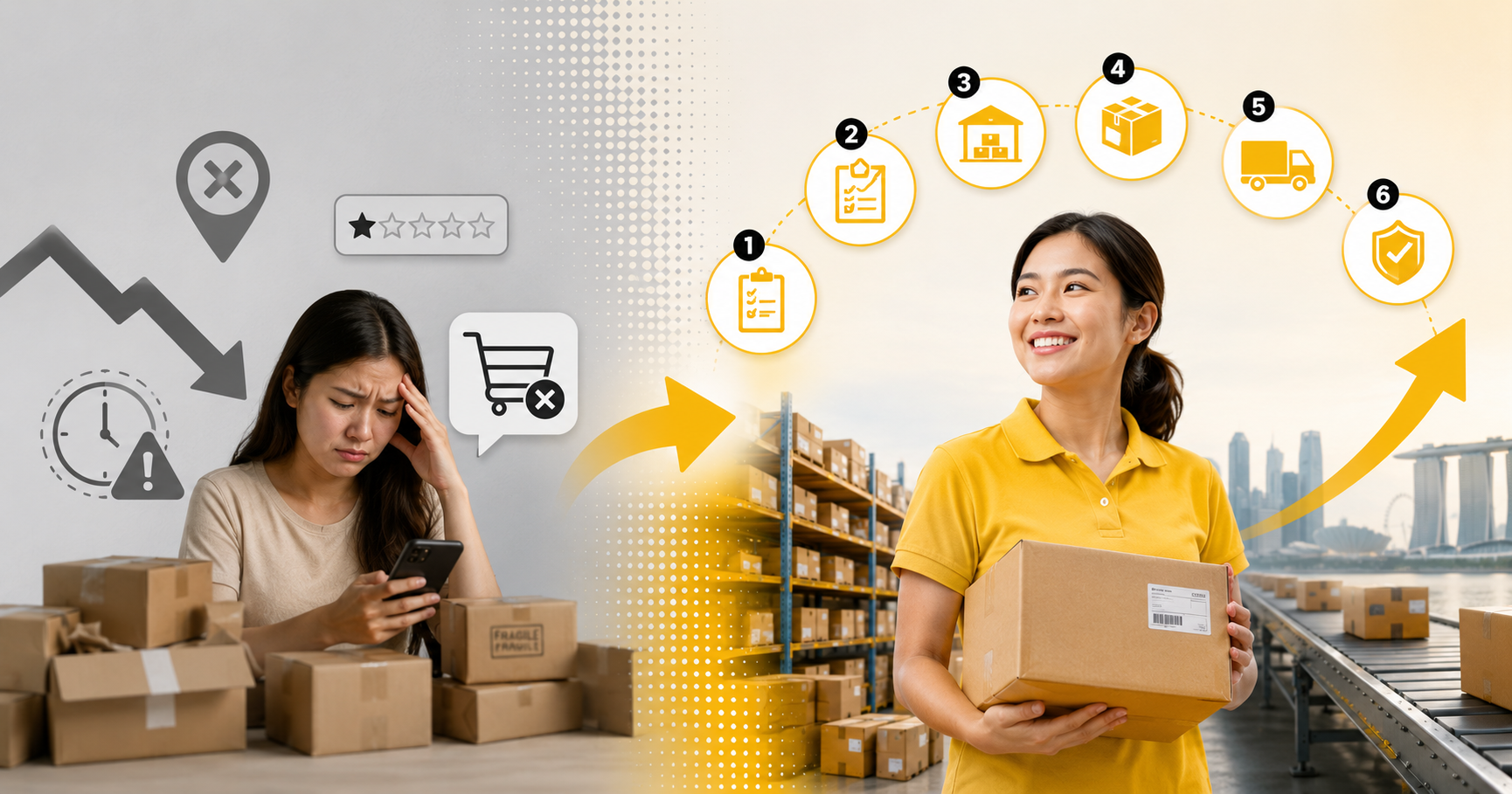
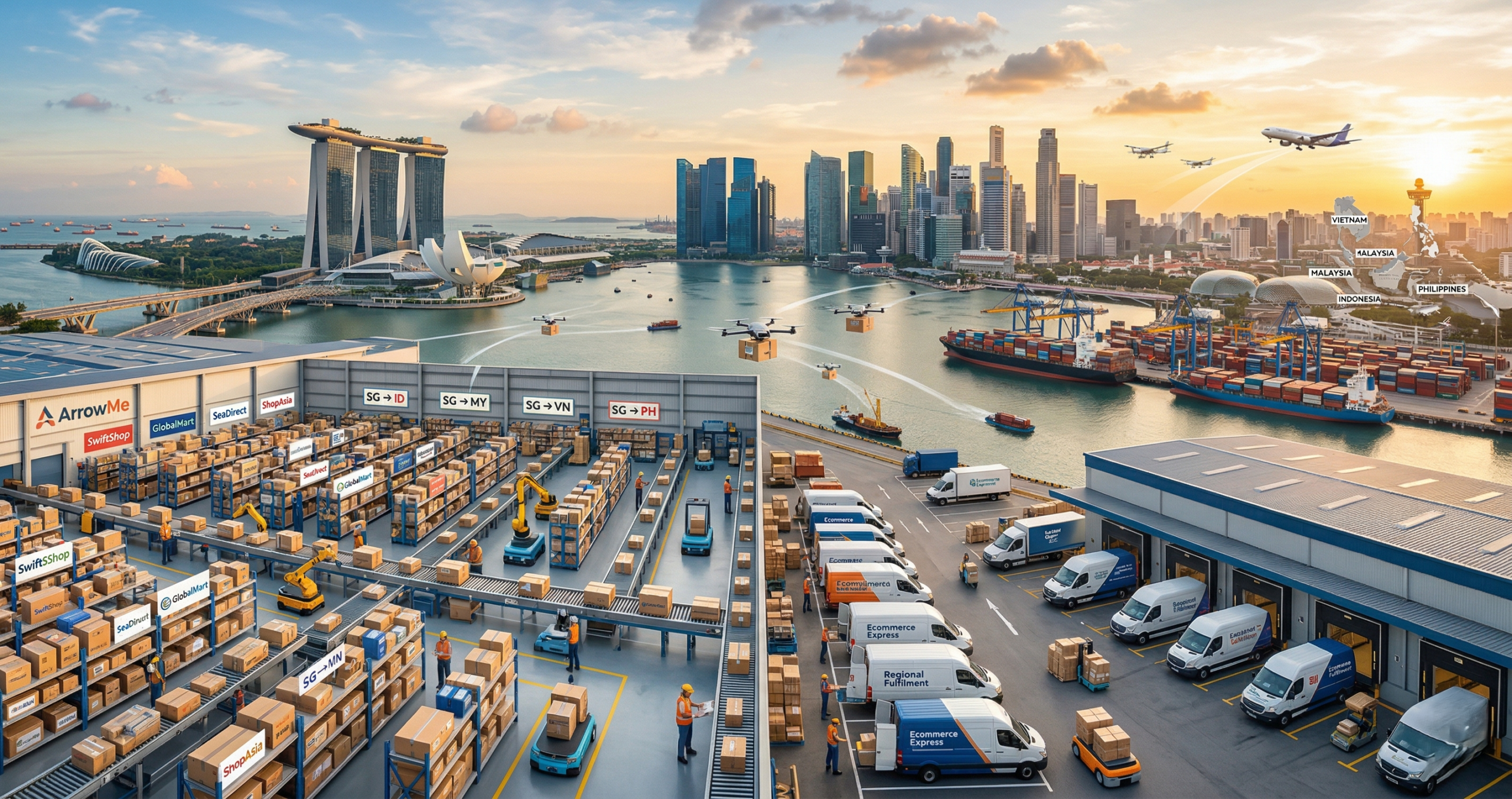
Every scaling ecommerce business hits a logistics wall. Orders stack up faster than the team can process them. Inventory accuracy slips. Shipping costs climb. Customer complaints about delayed or incorrect deliveries start eroding the reputation you spent years building. At this point, working harder doesn’t fix the problem—because the problem is structural, not operational.
This is precisely where a professional 3PL provider intervenes. Third-party logistics partners take ownership of warehousing, pick-and-pack, inventory management, and last-mile coordination—removing the operational ceiling that constrains so many otherwise healthy businesses. Singapore’s 3PL market was valued at USD 2.70 billion in 2024 and is projected to reach USD 5.02 billion by 2034, growing at a 6.40% CAGR. That growth reflects a fundamental shift: brands are no longer asking whether to outsource logistics, but which 3PL provider to trust with the operations that underpin their customer experience.
This guide explains what logistics bottlenecks actually are, why in-house fulfilment eventually fails at scale, and how the right 3PL provider clears the path for faster, more profitable growth.
What Are Logistics Bottlenecks—and Why Do They Form?
A logistics bottleneck is any point in your supply chain where capacity constraints cause orders, inventory, or information to back up. They are rarely caused by a single failure. More often, they are the compounding result of processes that worked at 100 orders per day but weren’t designed for 1,000.
The Five Most Common Logistics Bottlenecks
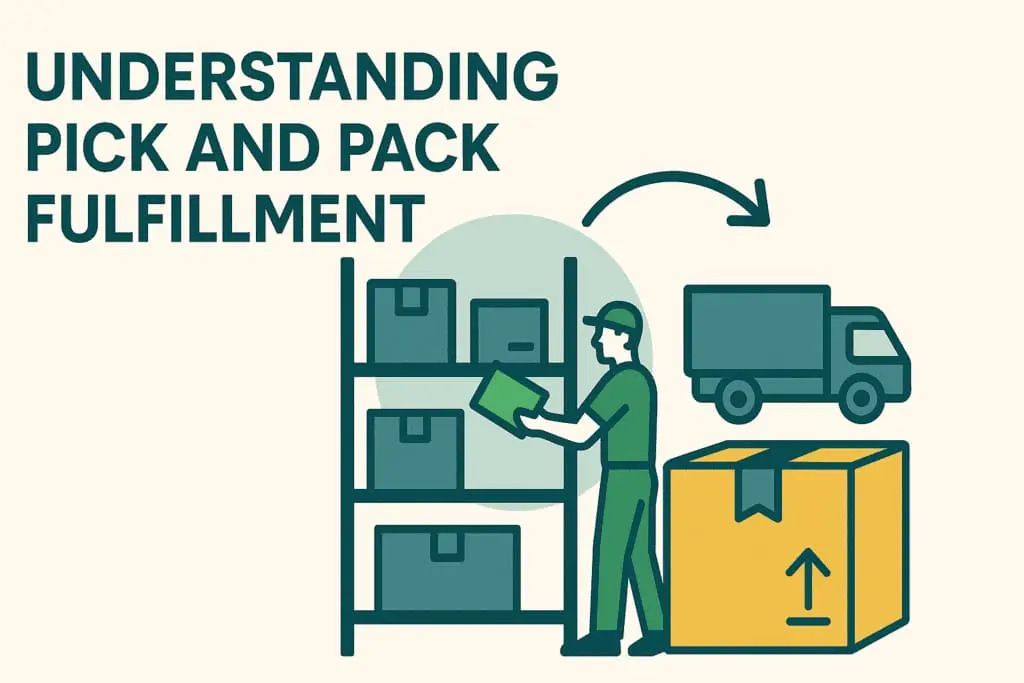 Inventory Visibility Gaps
When your ecommerce platform isn’t synchronised with your physical warehouse in real time, your published stock levels lie. Customers purchase products you don’t actually have available. Overselling creates cancellations, refunds, and lost lifetime value. Without accurate inventory management in Singapore, this problem worsens proportionally with every new channel you add.
- Warehouse Capacity Ceilings
A warehouse that comfortably handles 500 daily orders during normal trading can’t absorb a campaign-driven 3x spike without deteriorating. Pick rates slow, error rates climb, and dispatch windows extend. Most businesses don’t discover this ceiling until they’re already in the middle of a peak period.
- Labour Scaling Costs
Hiring fulfilment staff takes time and money, and headcount can’t be scaled up and down on demand. During slow periods, you’re paying for idle capacity. During growth phases, you can’t hire fast enough. The fixed nature of in-house labour is one of the most significant constraints on scalable ecommerce fulfilment in Singapore.
- Last-Mile Delivery
Fragmentation
Last-mile delivery accounts for up to 53% of total shipping costs. When brands manage carrier relationships independently, they miss volume-based discounts, lack route optimisation technology, and have no leverage during service disruptions. Every order becomes more expensive than it needs to be.
- Disconnected Technology
Marketplaces, webstores, warehouse management systems, and shipping platforms that don’t talk to each other in real time force teams into manual reconciliation. Information lags, picking errors, and fulfilment delays are the predictable outcomes.
Why In-House Fulfilment Eventually Fails Scaling Brands
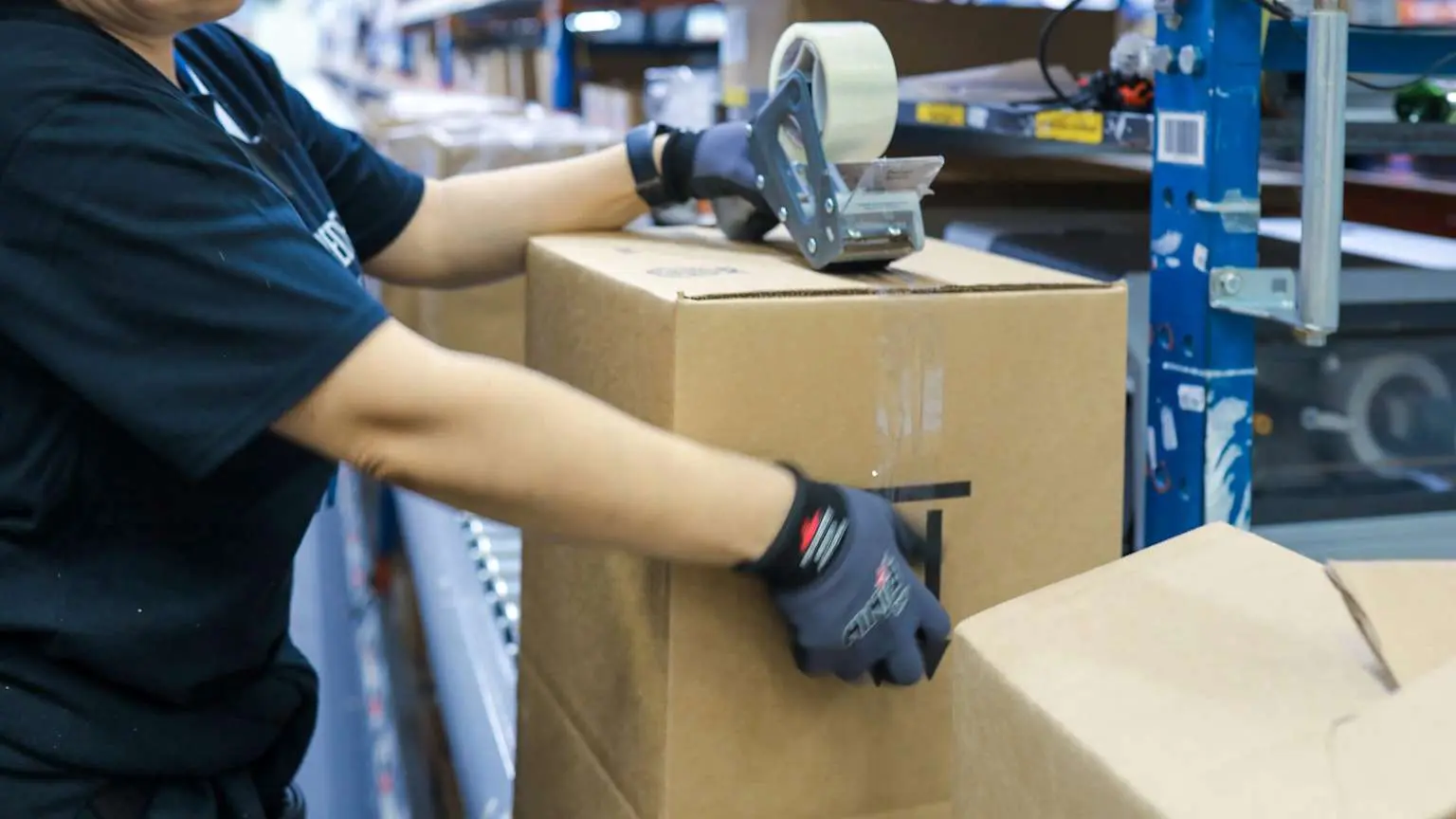
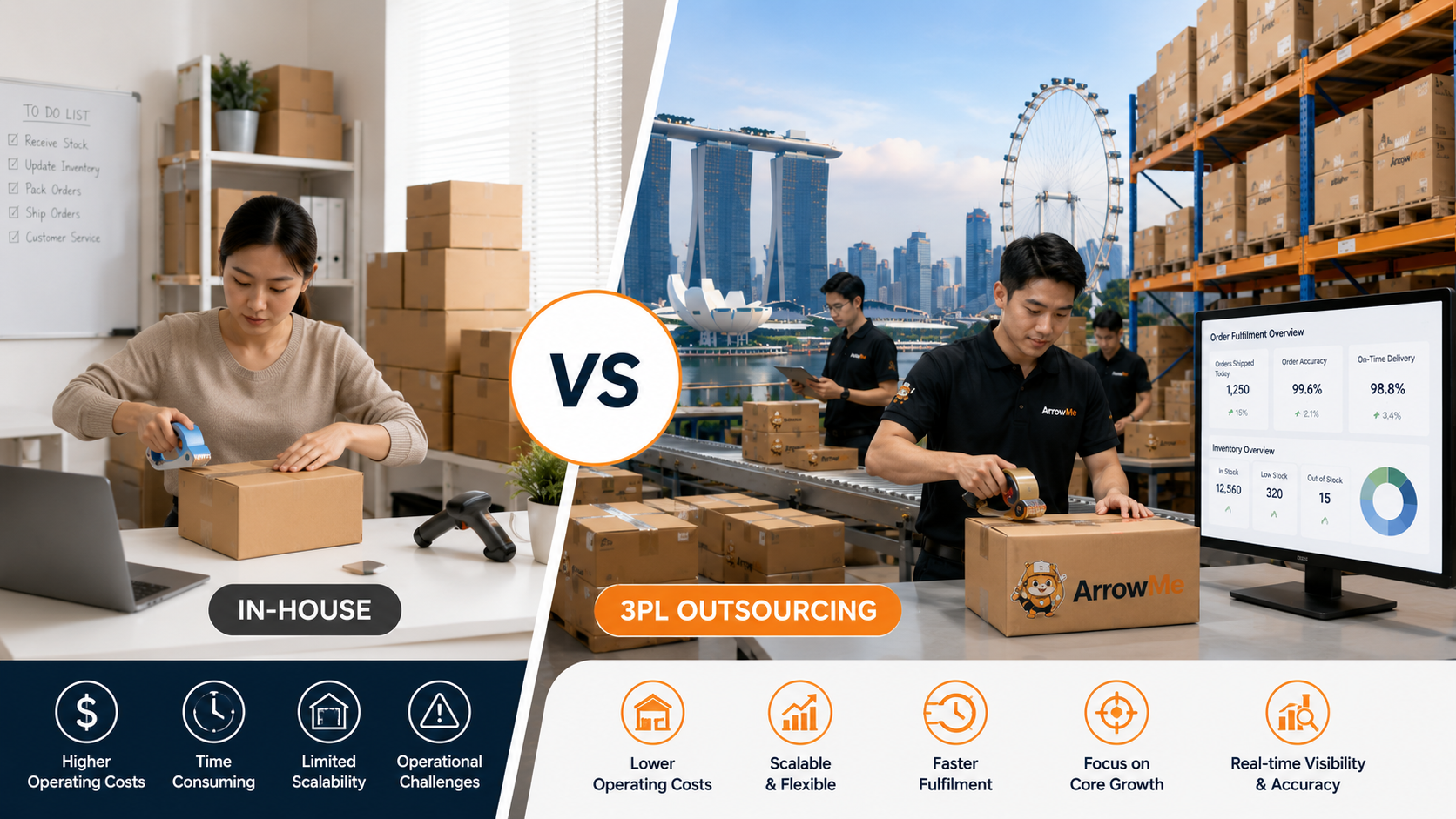
There is a stage at which managing your own warehouse is the right decision—typically in the early days when control matters more than scalability. But as order volumes grow, the economics of in-house fulfilment rapidly deteriorate.
At 10,000 orders per month, in-house fulfilment costs an estimated $15,000 – $25,000 monthly in labour, space, and technology. The equivalent service from a professional 3PL provider costs $10,000 – $13,000 —delivering better throughput, higher accuracy, and the shipping discounts that individual brands can’t negotiate independently.
At 50,000 orders per month, the disparity grows further. In-house costs can reach $70,000 – $120,000 , while a 3PL provider operating at scale delivers comparable service for $60,000 – $100,000 . The savings compound because 3PLs spread fixed infrastructure costs across dozens of clients simultaneously—their warehouse, their automation, their carrier contracts all become accessible without the capital investment.
This is why outsourcing to a 3PL provider is not a cost—it’s a capital reallocation. The resources you stop deploying on warehouse leases, equipment, and fulfilment headcount get redirected into product development, marketing, and revenue-generating activities that actually differentiate your brand.
How the Right 3PL Provider Removes Each Bottleneck
1. Real-Time Inventory Visibility Across Every Channel
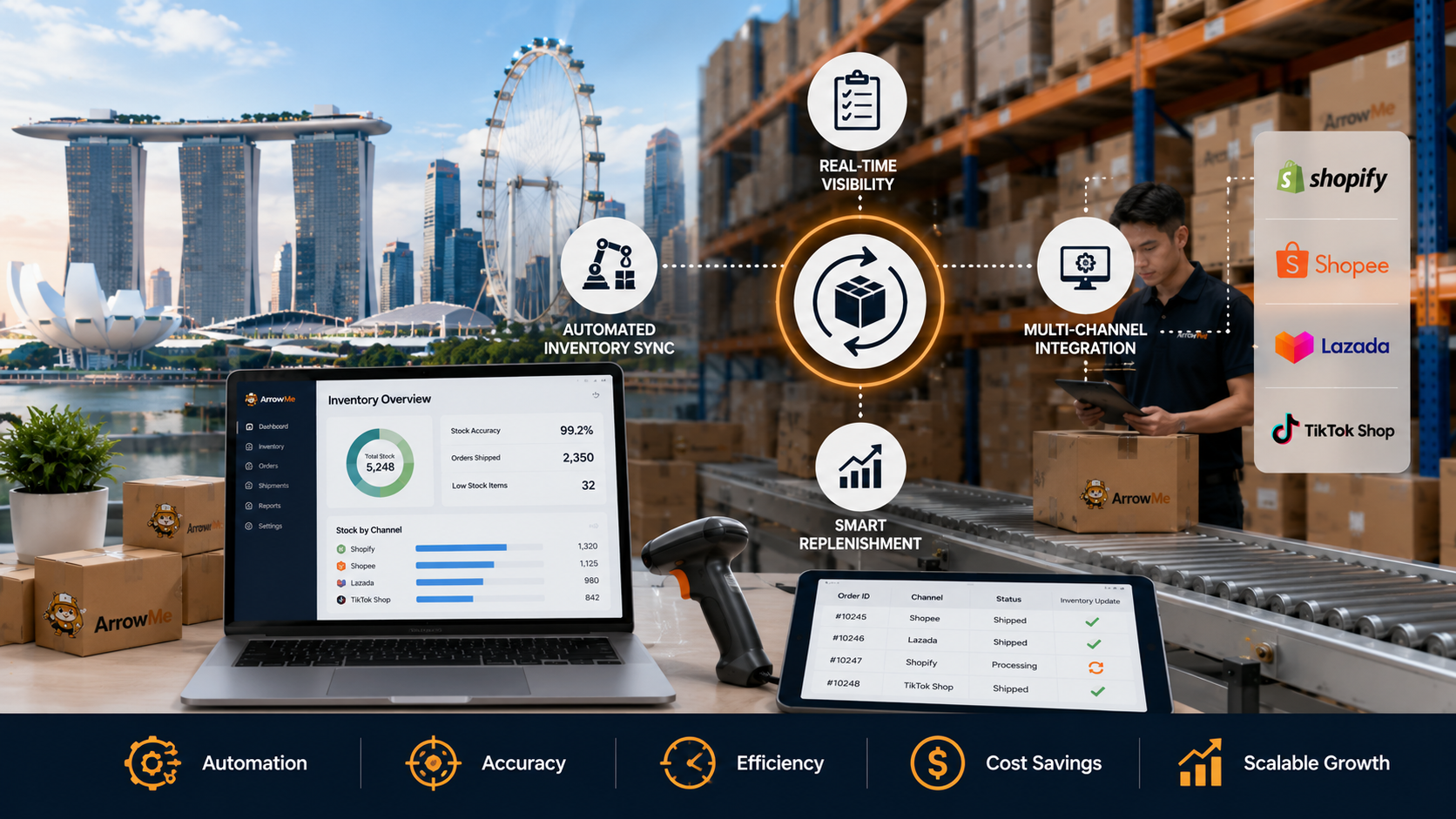
A professional 3PL provider integrates directly with your sales channels—Shopee, Lazada, TikTok Shop, Shopify—maintaining real-time inventory synchronisation across every platform simultaneously. The moment a unit is sold on any channel, stock is adjusted everywhere else. The moment new inventory is received at the fulfillment warehouse in Singapore, it becomes available for allocation immediately.
This level of inventory management in Singapore eliminates overselling, eliminates phantom stock, and gives both operations and commercial teams a reliable single source of truth. Reorder alerts fire automatically before stockouts develop, and AI-powered demand forecasting adjusts safety stock levels based on real sales velocity rather than historical guesswork.
2. Elastic Capacity That Scales With Demand
One of the most valuable features of a 3PL provider is the ability to scale capacity up and down without fixed commitments. When a product goes viral, when a seasonal peak arrives, or when you launch a major campaign—the 3PL absorbs the volume increase across its existing infrastructure. You pay for what you use. There are no idle staff costs during quiet periods and no capacity ceilings during growth phases.
This flexibility is particularly critical for ecommerce logistics in Singapore, where brands simultaneously manage marketplace promotions, regional campaigns, and cross-border fulfilment across APAC markets with very different demand patterns.
3. Technology and Automation Without Capital Investment
Leading 3PL providers invest in warehouse management systems, barcode and RFID scanning, automated sortation, and AI-powered routing—infrastructure that individual brands couldn’t justify independently. By working with a 3PL, you access enterprise-grade technology through affordable service fees rather than capital expenditure.
This technology directly addresses accuracy bottlenecks: barcode verification at every pick eliminates wrong-item errors, raising order accuracy from a manual average of 96–97% to 99%+. AI-powered 3PL operations deliver 20–40% efficiency improvements through dynamic route optimisation and predictive demand analytics.
4. Volume-Based Carrier Rates and Last-Mile Optimisation
A 3PL provider ships hundreds of thousands or millions of packages annually. That volume unlocks carrier rate negotiations that no individual brand can access independently. Those negotiated rates—typically 20–30% below published rates—are passed directly to clients, making every outbound shipment materially cheaper than if the brand shipped independently.
Beyond price, 3PL last-mile management includes route optimisation, real-time tracking, flexible delivery windows, and returns processing—the full set of capabilities that drive customer satisfaction scores in Singapore’s demanding ecommerce environment.
The Regional Dimension: 3PL Providers and APAC Expansion
How a 3PL Enables Regional Scaling Without Regional Infrastructure
For brands expanding beyond Singapore into Malaysia, Indonesia, Thailand, or the Philippines, the traditional model—building local warehousing in each market—is capital-intensive, slow, and complex. A 3PL provider with a Regional Ecommerce Logistics Hub infrastructure changes this entirely.
When your 3PL provider operates as a Regional Ecommerce Logistics Hub anchored in Singapore, you gain access to cross-border fulfilment capabilities without building country-level infrastructure. Inventory is centralised in Singapore, allocated across markets based on live demand data, and distributed through the 3PL’s established regional carrier networks. Entering a new market becomes a configuration exercise, not an infrastructure project.
This is how ArrowMe approaches regional logistics for its clients. By positioning itself as a Regional Ecommerce Logistics Hub that serves both local Singapore fulfilment and APAC cross-border distribution, ArrowMe enables brands to grow their geographic footprint without proportionally growing their operational complexity. For a brand like BMS Organics—facing expanding inventory and rising demand for timely delivery—this model transforms logistics from a constraint into a growth enabler.
Compliance, Customs, and Cross-Border Simplified
Cross-border ecommerce fulfilment in Singapore involves navigating different customs procedures, import duties, tax regimes, and documentation requirements across every destination market. Managing this independently is error-prone and resource-intensive. A professional 3PL provider with regional expertise handles this complexity as a standard service—pre-clearing shipments, calculating landed costs accurately, and ensuring documentation meets requirements for each destination country.
This expertise eliminates a major category of logistics bottleneck that brands encounter as they expand: the customs and compliance delays that hold shipments at borders, generate penalties, and create the kind of delivery experience that permanently damages customer trust in new markets.
How to Choose the Right 3PL Provider for Your Business
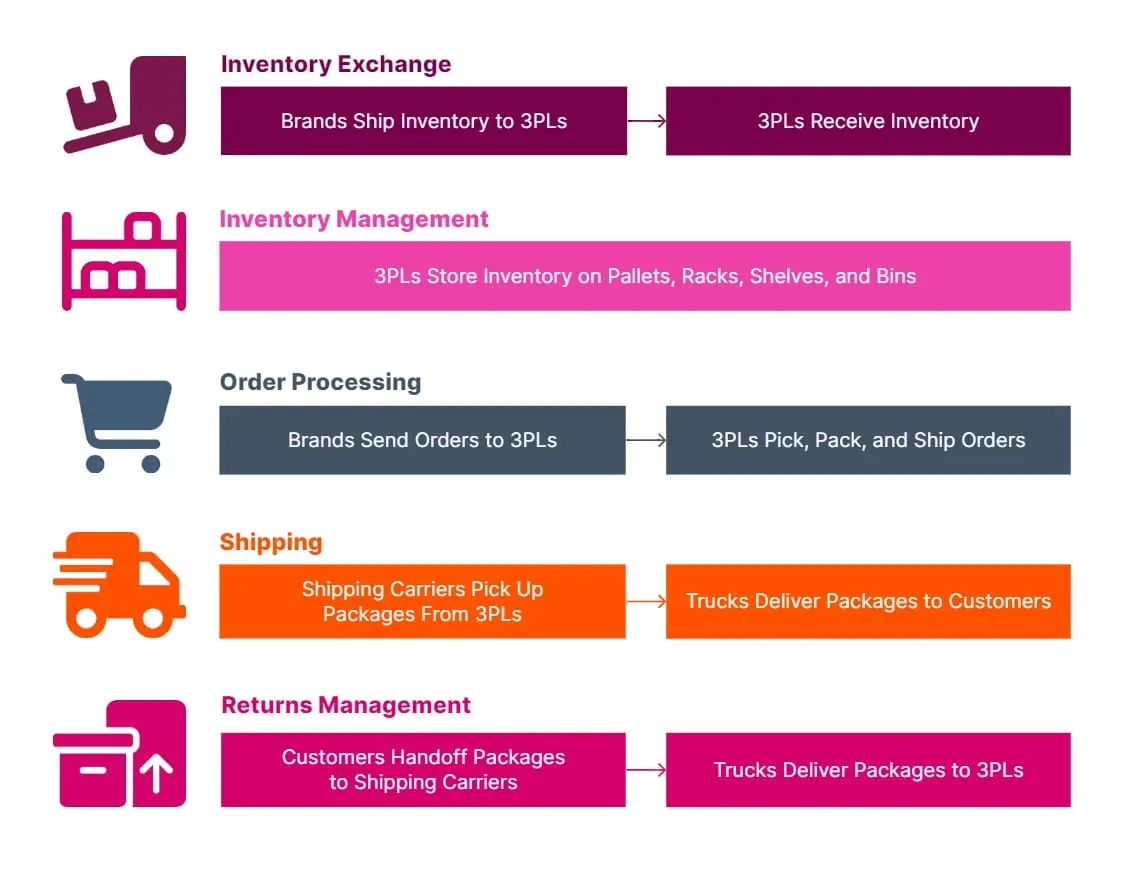
Not all 3PL providers are equal, and the wrong choice creates new bottlenecks instead of resolving existing ones. Use these criteria to identify a partner capable of genuinely supporting your growth:
Technology Integration Depth
Your 3PL provider should offer native API integrations with every platform you operate—not manual CSV uploads or batch syncing. Real-time integration with your ecommerce stack is non-negotiable for accurate inventory management in Singapore and seamless order flow.
Demonstrated Accuracy Performance
Ask for documented order accuracy rates. Best-in-class 3PLs operate at 99%+ with scan-verified workflows. A provider that can’t demonstrate this metric isn’t operating at the standard your customers expect.
Transparent, Scalable Pricing
The right model is pay-for-what-you-use: per-order handling fees, per-unit storage, and volume-tiered shipping rates. Avoid providers that lock you into fixed commitments that don’t flex with your demand patterns.
Regional Capabilities
If APAC expansion is in your roadmap, your 3PL provider needs established infrastructure and carrier relationships across your target markets. A Regional Ecommerce Logistics Hub with proven cross-border fulfilment is worth more than a Singapore-only operator at a marginally lower per-order rate.
Cultural and Operational Alignment
The best 3PL relationships function as genuine partnerships. Your 3PL provider should understand your brand standards, proactively flag operational issues before they become customer-facing problems, and measure their success by your growth—not just by throughput.